You scrub the counters. You mop the floors. You wipe down the sink until it shines. And then you walk past the same light switch you have touched 14 times today without giving it a second thought.
Most cleaning routines fixate on what looks dirty. The problem is that the spots that actually harbor the most bacteria usually look fine. A 2026 survey by cleaning expert Lynsey Crombie found that high-touch surfaces like light switches, remote controls, and door handles are the most consistently overlooked items in British homes — not because people do not care, but because these items do not register as “dirty” until someone points it out.
These are not just cosmetic misses. Fridge seals can harbor enough bacteria to contaminate food. A kitchen sponge left unwashed carries more germs per square inch than a toilet seat. Your extractor fan is recirculating grease-laden air while you congratulate yourself on a clean kitchen.
Here is what you are probably skipping, how to clean it, and how often it actually matters.
The High-Touch Surfaces You Touch Every Day
Lynsey Crombie, the UK’s leading home cleaning expert and author of Queen of Clean 15-Minute Clean, put it bluntly: “Ignoring high-touch areas like light switches, remotes, and door handles often gets missed — but they’re germ hotspots.” She explains that we focus on “the visibly dirty parts of our home — floors, worktops, and sinks — while the smaller, more frequently touched items fade into the background.”
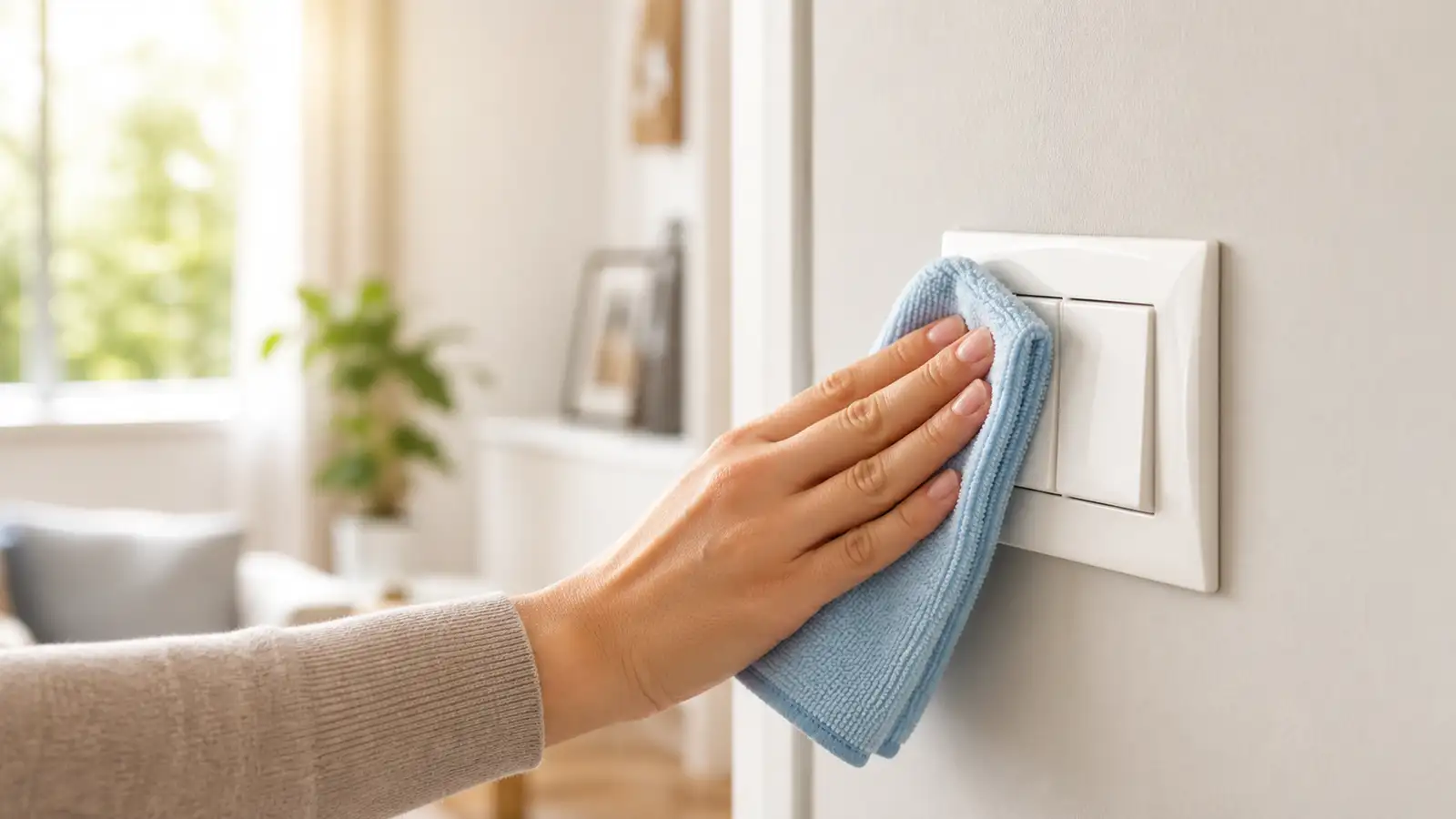
Light switches, door handles, remote controls, toilet flush buttons, pet toys, and cupboard handles all collect oils from skin, bacteria, and viruses through daily use. They rarely look dirty, which is exactly why nobody cleans them.
For most of these surfaces, Crombie says warm soapy water is sufficient if you are cleaning them regularly. “It breaks down grime and washes away bacteria without the need for harsher chemicals.” If someone in your household has been sick, or if it has been a while, follow up with a disinfectant spray.
One technique detail that matters: spray the cloth, not the surface. For door handles, cupboard doors, and wall-mounted switches, spraying directly can damage paint or cause discoloration over time. Apply the cleaner to a microfiber cloth first, then wipe. It takes five extra seconds and prevents finish damage that costs hours to fix.
How often: once a week for light switches and door handles. Remote controls and toilet flush buttons whenever you do your bathroom clean. If someone is sick, do them daily until they recover.
Kitchen Spots Even Clean People Miss
Fridge Seals
You wipe down the shelves. You toss the expired yogurt. But those rubber seals lining the door? Emily Barron, a cleaning expert at Property Rescue, warns they “can become party central for germs and even insects.” The folds in the rubber trap moisture and food particles, creating an environment where mold and bacteria thrive.
The fix is straightforward. Pull the rubber back with your fingers and scrub with a small brush and mild soap and water. If the seals have stained or accumulated stubborn buildup, a paste of baking soda and water works as a mild abrasive. Do this once a month. It takes under five minutes and eliminates a contamination vector you probably did not know existed.
The Extractor Fan
Your extractor hood sits above the stove, catching steam, grease splatter, and food particles every time you cook. Most people wipe down the hob and call it done. The fan itself accumulates a serious layer of grease that recirculates through your kitchen air.
Wipe the exterior with a kitchen towel after every use. Once a month, remove the filters and wash them in warm water with washing-up liquid. Be careful not to get water inside the mechanical components. Dry everything before reassembling.
Underneath Appliances
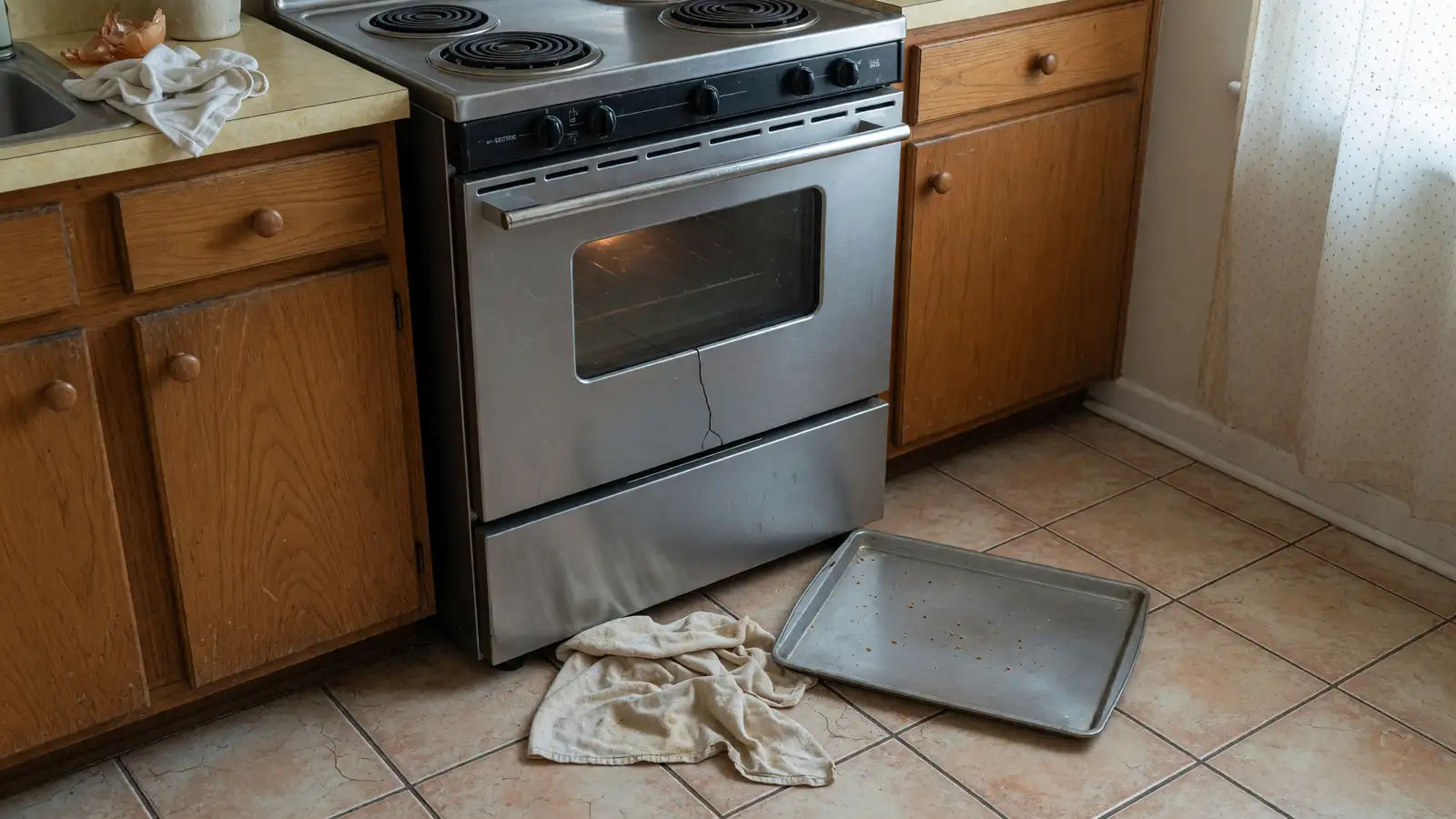
If your oven, microwave, or washing machine is not built in, there is probably a horror show underneath it. Dust, food crumbs, pet hair, and the occasional lost spoon accumulate in a crevice you last saw when the appliance was installed.
Twice a year, pull appliances out if possible. Remove larger debris by hand, vacuum the rest, then scrub stains with a wet cloth. If the appliance cannot be moved, a flexible vacuum crevice tool and a yardstick wrapped in a microfiber cloth can reach most of what is under there.
The Sponge You Clean With
This one is almost funny. The thing you use to clean dishes is probably the dirtiest item in your kitchen. Olivia Young, a cleaning chemist at Astonish, explains that a kitchen sponge needs to be cleaned thoroughly after every use “to stop it soaking up germs.”
Spritz it with a concentrated disinfectant spray after washing dishes. If it is machine-washable, toss it in with your tea towels on laundry day. Replace sponges every two weeks regardless.
The Kettle
Scale buildup is not just unsightly. It affects how efficiently your kettle heats water and can flake off into your tea. Nicola Rodriguez of Essex House Dolly advises descaling “as soon as you start to see a build up.” White vinegar or a commercial descaling solution both work. Fill the kettle halfway, add your descaler, boil, let it sit for 30 minutes, rinse thoroughly, and boil fresh water to clear any residual taste.
Window Blinds: The Dust Magnet Nobody Sees
Blinds are vertical dust traps mounted at eye level. They accumulate grime slowly enough that you stop noticing it, then one day the sun hits them at the right angle and you see months of neglect in sharp relief.
Daley Quinn, writing for Southern Living, consulted professional cleaners who recommend dusting blinds every week or two. The preferred method is vacuuming with a brush attachment. As one pro noted, “dust will be sucked up and not land on the floor.” If you do not have a brush attachment, a microfiber cloth works, but you will be redistributing some dust onto the floor below.
If your blinds have slats that do not overlap too much, close them and dust across both sides in one pass. For celluloid or fabric blinds, dust up and down as well as side to side to catch particles trapped in the texture.
For blinds that have graduated from dusty to stained or yellowed, a deep clean is in order. Vinyl and plastic blinds can be taken down and soaked in a bathtub with mild soap and warm water. Wooden and fabric blinds need spot-cleaning with a damp cloth — never soak them, and never use bleach or corrosive cleaners. A forgotten drop of water on a wood floor beneath can stain it, so lay down towels before you start. Sabrina Fierman of New York’s Little Elves sums up the philosophy: “Less is more. Dusting with a powerful vacuum brush attachment and washing with a cloth dampened with mild soapy water is often all that’s needed.”
Do not forget the curtain rods and valances above. Vacuum the hardware first, then wipe down with a dry microfiber cloth. The top edges of curtain rods collect a surprising amount of dust that falls onto your clean windowsill the moment you close the drapes.
Baseboards and Air Vents: The Horizontal Dust Shelves
Baseboards are horizontal surfaces, and horizontal surfaces collect dust. That is physics. What makes baseboards worse is that they sit at the very bottom of your field of vision, so you glance right past them.
Run a dryer sheet along baseboards after vacuuming. The anti-static properties repel dust for longer than a dry cloth, and it picks up pet hair that a duster leaves behind. If the buildup is heavy (think months of neglect in a home with pets), a damp microfiber cloth with a drop of dish soap cuts through the greasy film that forms when dust mixes with humidity.
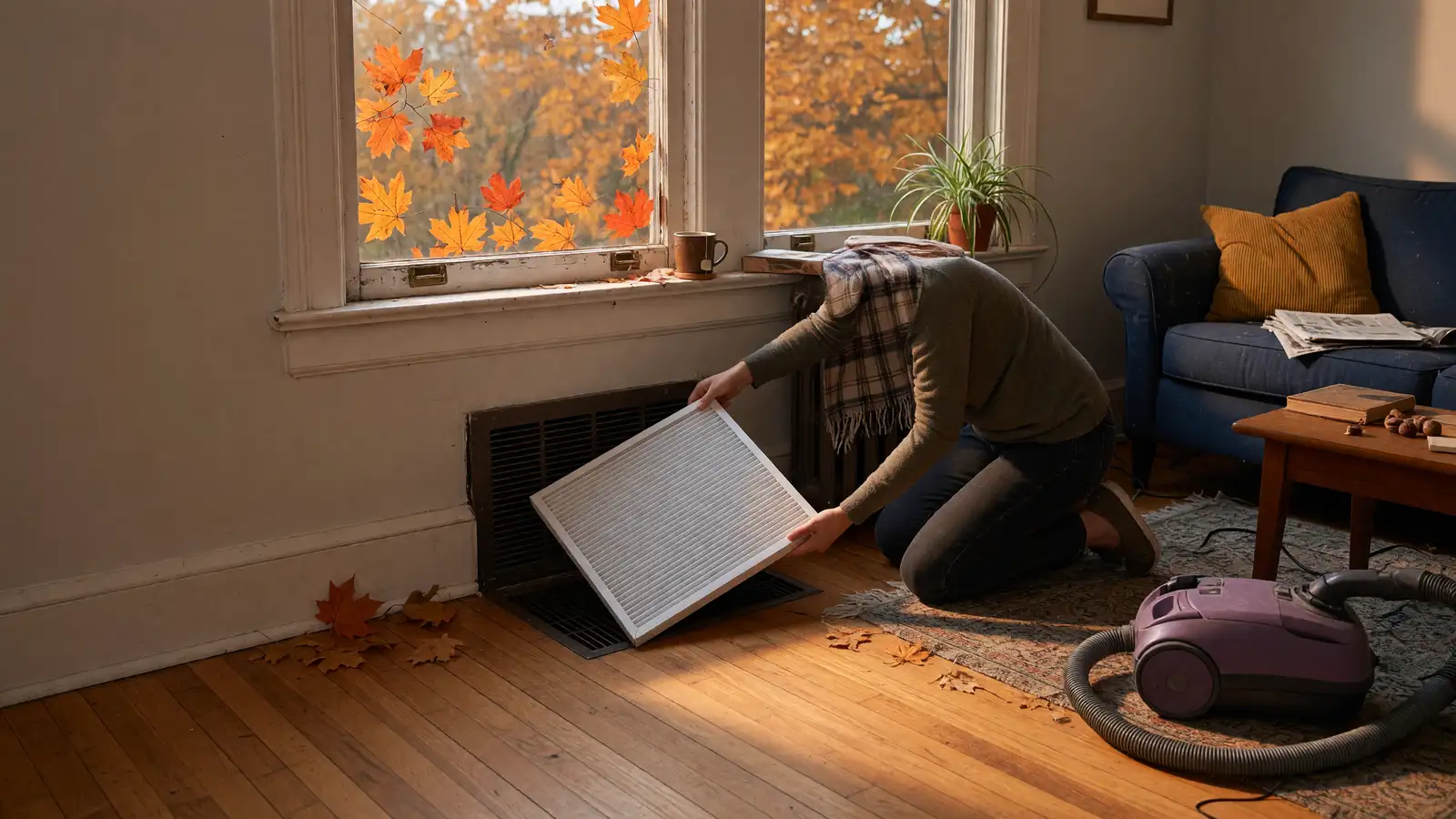
Air vents and return grilles are equally invisible. They pull air through your home constantly and trap a layer of dust that reduces HVAC efficiency and recirculates particles into every room. Unscrew the vent covers every three months, vacuum both sides, and wash them in warm soapy water. While the covers are off, vacuum as far into the duct opening as your hose reaches. If you have never done this, the first time will be unsettling. The second time takes 15 minutes.
The Cleaning Tools Themselves
Your vacuum filter, mop head, and cleaning cloths are only as effective as their last wash. A vacuum with a clogged filter loses suction and blows fine dust back out the exhaust. A mop head that has not been washed in weeks is smearing yesterday’s dirt across today’s floor.
Check vacuum filters monthly. Most are washable. Rinse them under running water until the water runs clear and let them dry completely before reinstalling. Mop heads go in the washing machine on a hot cycle after every three to four uses. Microfiber cloths should be washed separately from cotton items because lint from towels clogs the microfiber fibers and ruins their electrostatic grip.
This is the meta-level of cleaning that nobody advertises. You buy the tools, use them, and assume they are working. They are not, unless you maintain them.
How to Actually Remember These
The reason these spots stay dirty is not laziness. It is that they are not part of anyone’s routine. The bathroom mirror looks smudged, so you clean it. The light switch looks fine, so you walk past it 300 more times.
The fix is to attach these tasks to ones you already do. When you wipe down kitchen counters, hit the light switches and cupboard handles on your way. When you clean the bathroom, do the toilet flush button and door handle. When you vacuum the living room, run the brush attachment over the blinds.
A weekly cleaning routine that includes these touchpoints takes maybe five extra minutes and eliminates the accumulated neglect that turns a quick wipe into a scrubbing project. If you have let things slide for a while, a recovery clean session can knock out the backlog in an afternoon.
The lesson is not that your home is secretly filthy. It is that the cleaning routines most of us learned stop at visible surfaces. Add these six spots to your rotation and you will be cleaning what actually matters instead of just what looks good when guests arrive.