A quality leather sofa can last twenty years or more, outlasting several fabric sofas over the same period. The catch is that leather requires specific care that differs from every other material in your home. The wrong cleaner can strip the protective finish, and neglect leads to cracking that cannot be repaired.
Leather care is not complicated. It requires two products and a maintenance schedule that takes less than thirty minutes per year. Here is what to do.
The Type of Leather Matters
Before cleaning, determine what type of leather you are dealing with. The care requirements differ significantly.
Protected or finished leather has a polymer coating that makes it resistant to stains and spills. This is the most common type of leather on modern furniture and the easiest to maintain. It can be cleaned with a damp cloth and mild soap. Most leather sofas sold in furniture stores are protected leather.
Aniline or semi-aniline leather has a minimal or no protective coating. The natural grain and markings of the hide are visible, which is aesthetically desirable but makes the leather much more susceptible to staining. Water alone can leave marks. Aniline leather requires specialized cleaners and conditioners designed specifically for unfinished leather.
Check the manufacturer’s tag or care instructions to identify your leather type. If you cannot determine the type, treat it as aniline leather to avoid accidental damage. It is safer to be too gentle than too aggressive.
The Cleaning Routine
For protected leather, weekly dusting with a dry microfiber cloth removes the surface dust and body oils that accumulate with use. The crevice tool on your vacuum cleaner reaches into the seams and tufted areas where debris collects.
Every three months, a slightly deeper clean with a damp microfiber cloth and a drop of mild soap — castile soap or saddle soap — removes the buildup that dry dusting cannot. Wring the cloth thoroughly so it is damp, not wet. Excess water penetrates leather and can cause staining or stiffening as it dries. Wipe the entire surface, then immediately dry with a clean cloth.
For aniline leather, skip the water entirely and use a dedicated leather cleaner formulated for unfinished leather. These cleaners are solvent-based rather than water-based and clean without the risk of water marks.
Conditioning
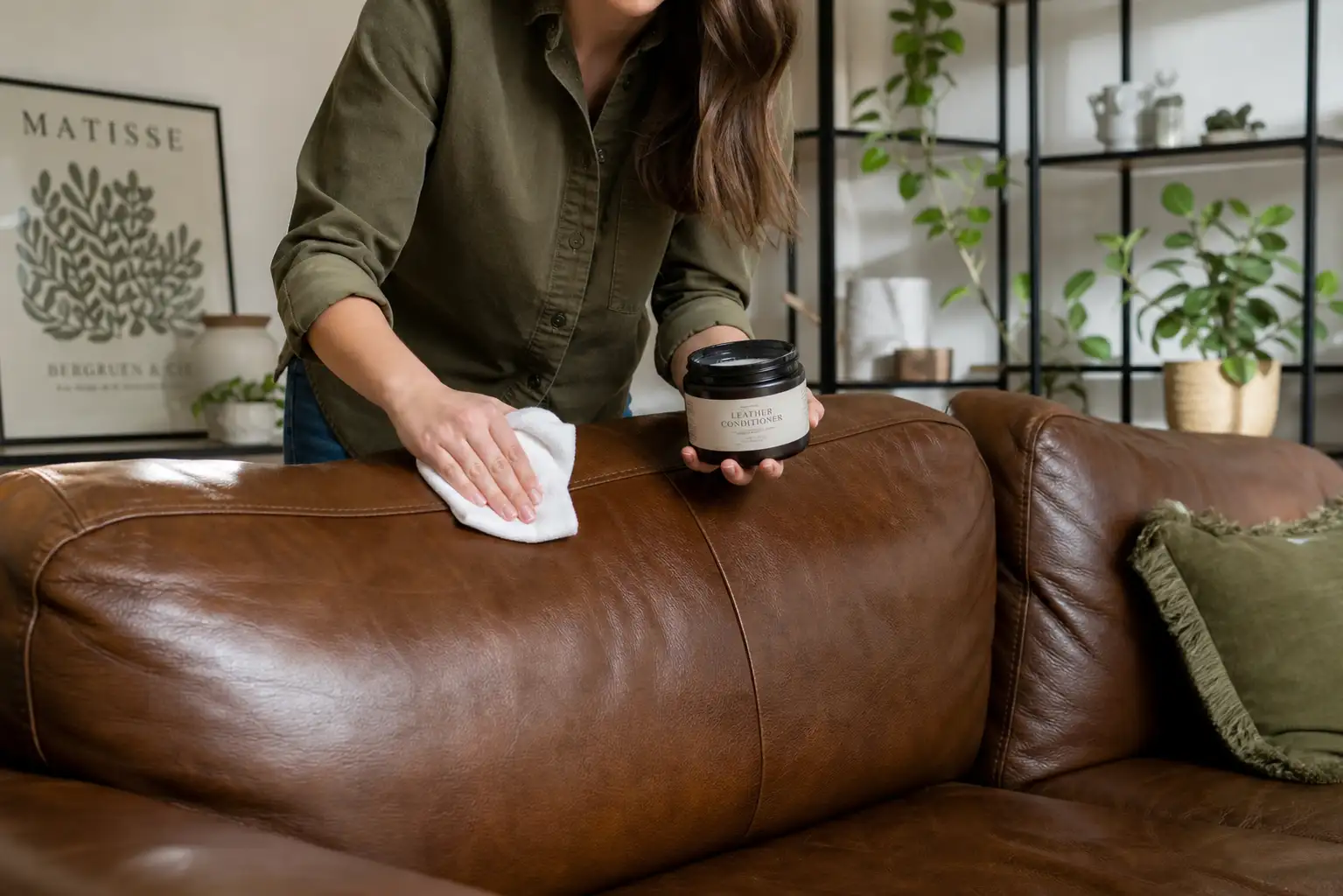
Leather is skin, and like skin, it dries out over time. Conditioning replenishes the oils that keep leather supple and prevent cracking. For protected leather, condition once per year. For aniline leather, condition every six months. In very dry climates, increase the frequency.
A leather conditioner is not the same as a cleaner. Cleaner removes dirt. Conditioner replenishes oils. Using a combination product trades effectiveness for convenience. Separate products produce better results.
Apply conditioner sparingly with a clean cloth, working in small sections. Less is more. Excess conditioner sits on the surface, attracting dust and transferring to clothing. Buff the surface with a dry cloth after conditioning to remove any excess. The leather should feel smooth and dry, not greasy.
What to Avoid
Never use household cleaners not specifically designed for leather. All-purpose sprays, glass cleaners, and vinegar solutions can strip the finish or cause discoloration that cannot be reversed.
Never place leather furniture in direct sunlight. UV radiation fades leather and accelerates drying. Position leather furniture away from windows, or use window film or curtains to block direct sun during the brightest hours.
Never use heat to dry leather that has gotten wet. Heat shrinks and stiffens leather fibers. Let wet leather dry naturally at room temperature, away from radiators, heating vents, and hair dryers.
Leather furniture rewards consistent, minimal care. A wipe-down every week, a deeper clean every three months, and a conditioning once per year is the entire routine. The reward is a piece of furniture that develops character rather than wearing out, and that still looks beautiful when fabric sofas purchased at the same time have long since been replaced.