Summer 2026 is bringing a notable shift in how people think about their living spaces. The conversation around minimalism has moved past counting possessions or forcing everything into boxes. Home design professionals are now calling it the year of the “intentional home” — spaces where every element exists because it serves a clear purpose, not because it fits a rule.
Builder Magazine’s recent analysis of summer 2026 home design trends confirms this direction (source). New-home buyers are prioritizing purpose-driven flex rooms, concealed utility features, and cleaner aesthetics over the open-concept excess that dominated the previous decade.
This article breaks down how intentional minimalism works in practice, room by room, so you can apply these principles regardless of your home’s size or budget.
What Makes Intentional Minimalism Different
Traditional minimalism often asks “what can I remove?” Intentional minimalism asks “what deserves to stay?” The distinction matters. One approach is subtractive — you strip away until you hit an arbitrary number. The other is selective — you evaluate each item and zone based on whether it actively supports how you live.
The trend gained traction as people spent more time in smaller spaces. A writer for Business Insider documented living in a 97-square-foot micro-apartment in Paris and found that constrained square footage forced a kind of clarity that larger homes never demanded (source). Every object had to justify itself. That mindset is now spreading to standard-sized homes.
The Entry Zone: First Impressions Without the Clutter
Most entryways accumulate shoes, bags, keys, and mail into a visual mess that sets the wrong tone the moment you walk in. Intentional design here means creating dedicated landing spots for each category.
A simple wall-mounted shelf with hooks above handles coats and bags. A shallow basket underneath catches shoes. A small tray near the door holds keys and wallets. The goal isn’t to hide everything — it’s to give every incoming item a defined address so nothing drifts into visual noise.
If you have space for a narrow console table, the surface stays clear except for the tray. The drawer underneath holds outgoing mail and a small notepad. That’s it. The entry zone works because each object has exactly one place.
The Kitchen: Concealing Utility Without Losing Access
One of the strongest themes in 2026 home design is what professionals call the “invisible kitchen” — storing the tools you need while keeping surfaces clean. This doesn’t mean a bare kitchen that looks like a showroom. It means every item stays visible only when actively in use.
Consumer Reports recently named the IKEA 365+ Food Storage Container as the top-rated food storage product for 2026, scoring highest in durability, ease of use, and seal quality among all products tested (source). The principle behind that recommendation applies broadly: containers that stack neatly, seal reliably, and store efficiently make intentional kitchen design achievable at any budget.
Practical steps:
- Store dry goods in matching containers so the pantry looks uniform
- Keep only daily-use appliances on the counter
- Use drawer dividers for utensils instead of countertop caddies
- Designate one cabinet zone for bulk items and rotate from there
The Living Area: Purpose-Driven Furniture Placement
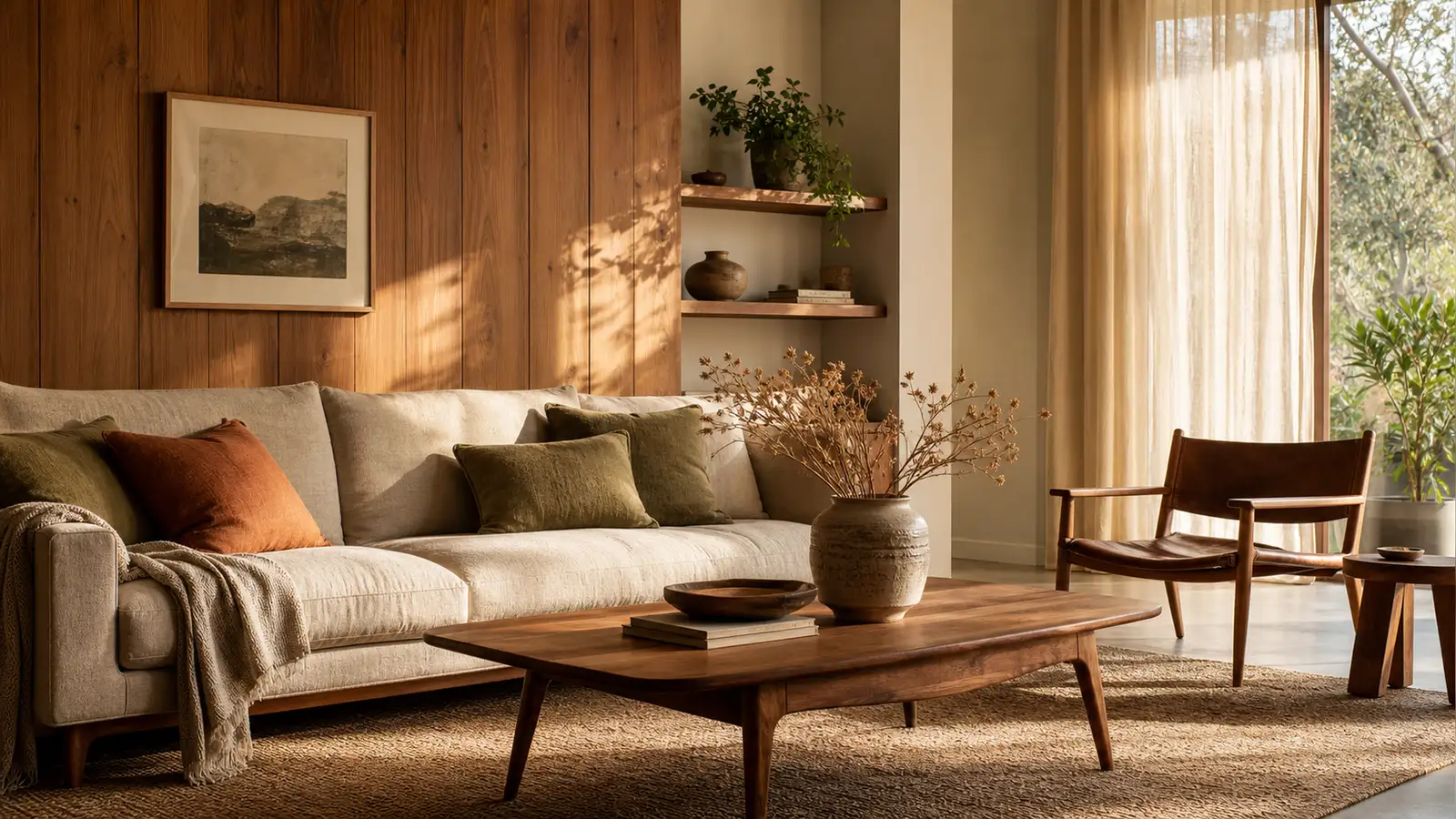
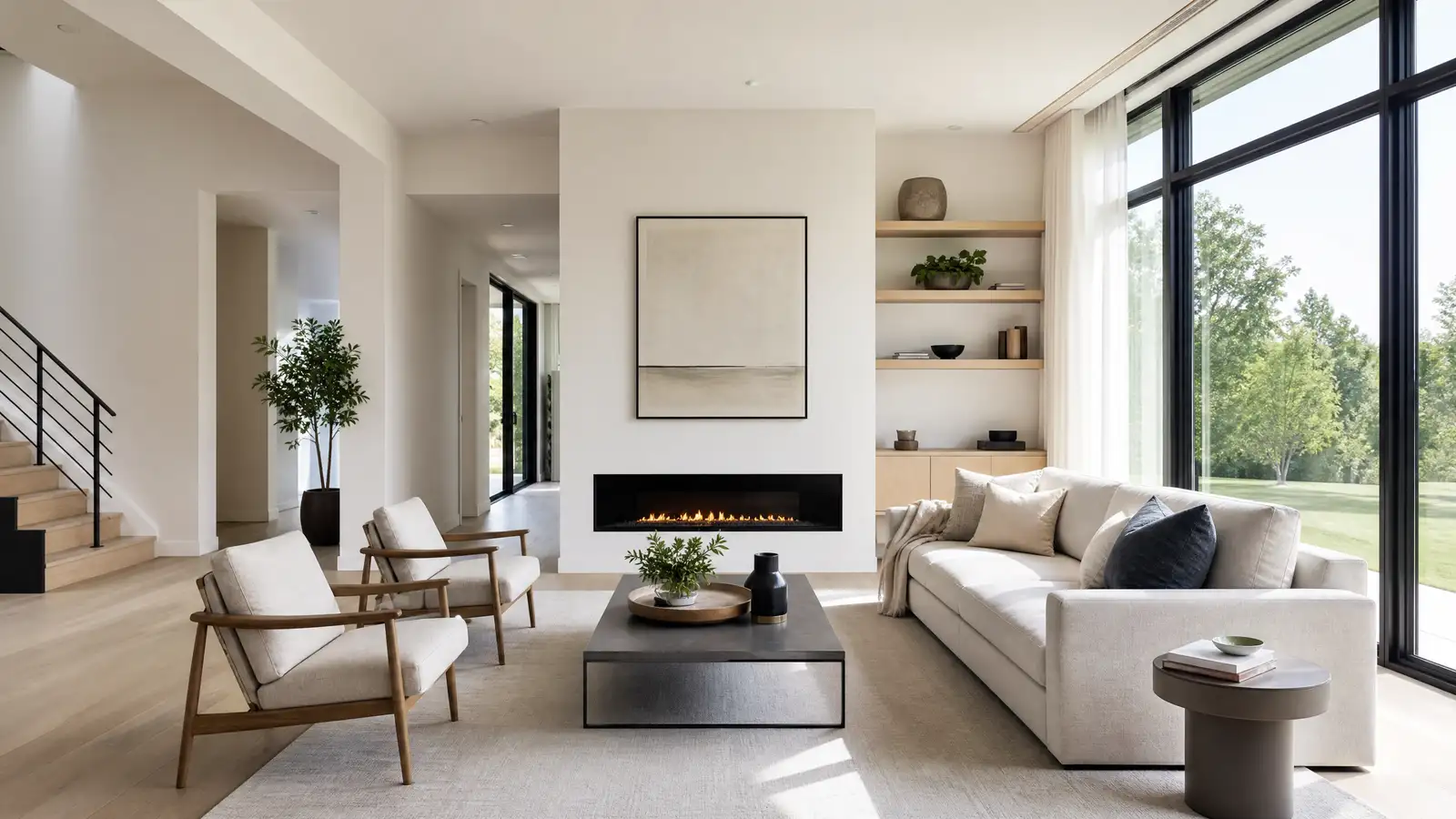
Intentional minimalism in the living room means every piece of furniture answers a specific question about how you use the space. Do you watch movies? Face seating toward the screen. Do you read? Add one dedicated chair with proper lighting near a bookshelf. Do you host? Arrange seating to support conversation rather than television viewing.
The mistake most people make is filling a living room because empty space feels unfinished. Intentional design leaves room to breathe. Negative space isn’t wasted space — it’s what makes the room feel calm. If a corner serves no function, don’t force a decorative table into it. Let it be empty.
The Bedroom: A Calm Zone, Not a Storage Overflow
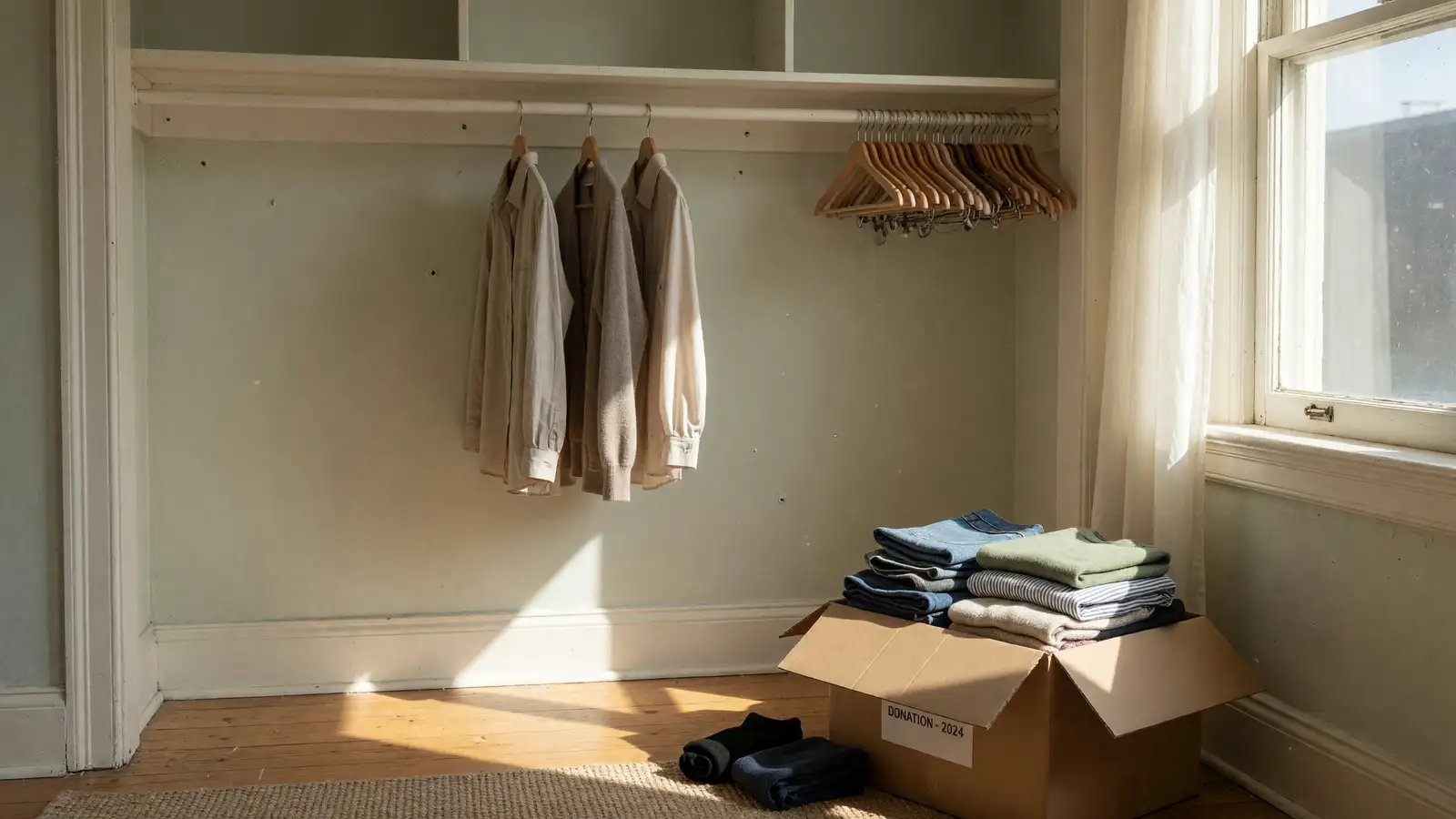
Bedrooms frequently become the dumping ground for items that haven’t found a home elsewhere. Intentional minimalism flips that pattern. The bedroom’s primary function is rest, and every decision about what stays should support that goal.
Under-bed storage works when you use it for seasonal items you access a few times per year — not for everyday clutter you’re too tired to sort. Nightstands should hold only what you actually use before sleep: a book, a lamp, maybe a glass of water. If your dresser surface collects random objects, that’s a signal those objects need a dedicated home somewhere else in the house.
Making It Work in Small Spaces
The intentional minimalism approach actually becomes easier as square footage shrinks, because constraints force clarity. A micro-apartment dweller in Paris found that 97 square feet demanded decisions that a larger space would let you postpone indefinitely (source).
For apartments and smaller homes:
- Use vertical space intentionally — wall shelves, pegboards, and over-door organizers
- Choose dual-purpose furniture: a storage ottoman, a bed with drawers, a dining table that doubles as a desk
- Rotate seasonal items out of sight to keep daily zones uncluttered
- Accept that some activities happen outside your home — not every hobby needs a dedicated zone
The Bottom Line
Intentional minimalism isn’t about living with less for its own sake. It’s about living with what matters, arranged in ways that make your daily routines smoother. The 2026 shift toward purpose-driven home design reflects a broader cultural move away from accumulation and toward clarity.
Start with one zone. Give every item a reason to exist there. Remove what doesn’t earn its spot. Then move to the next room. The compound effect of small, intentional choices is a home that feels designed rather than assembled.