A closet is only as functional as the system you put inside it. Most people treat their closet as a dumping ground where clothes go to disappear behind a pile of everything they own. The difference between that and a closet that actually works comes down to intentional placement of the right organizational tools.
Closet organization in 2026 is less about buying expensive systems and more about using the right tools in the right places. What used to mean grabbing a pack of plastic hangers from the hardware store and hoping for the best has become more intentional. Professional organizers have settled on specific strategies that work across closet sizes, and the products available have gotten better without getting expensive.
Here are ten closet organization ideas that work whether you have a walk-in or a closet barely wide enough to hang a coat.
1. Switch to Velvet Non-Slip Hangers Immediately
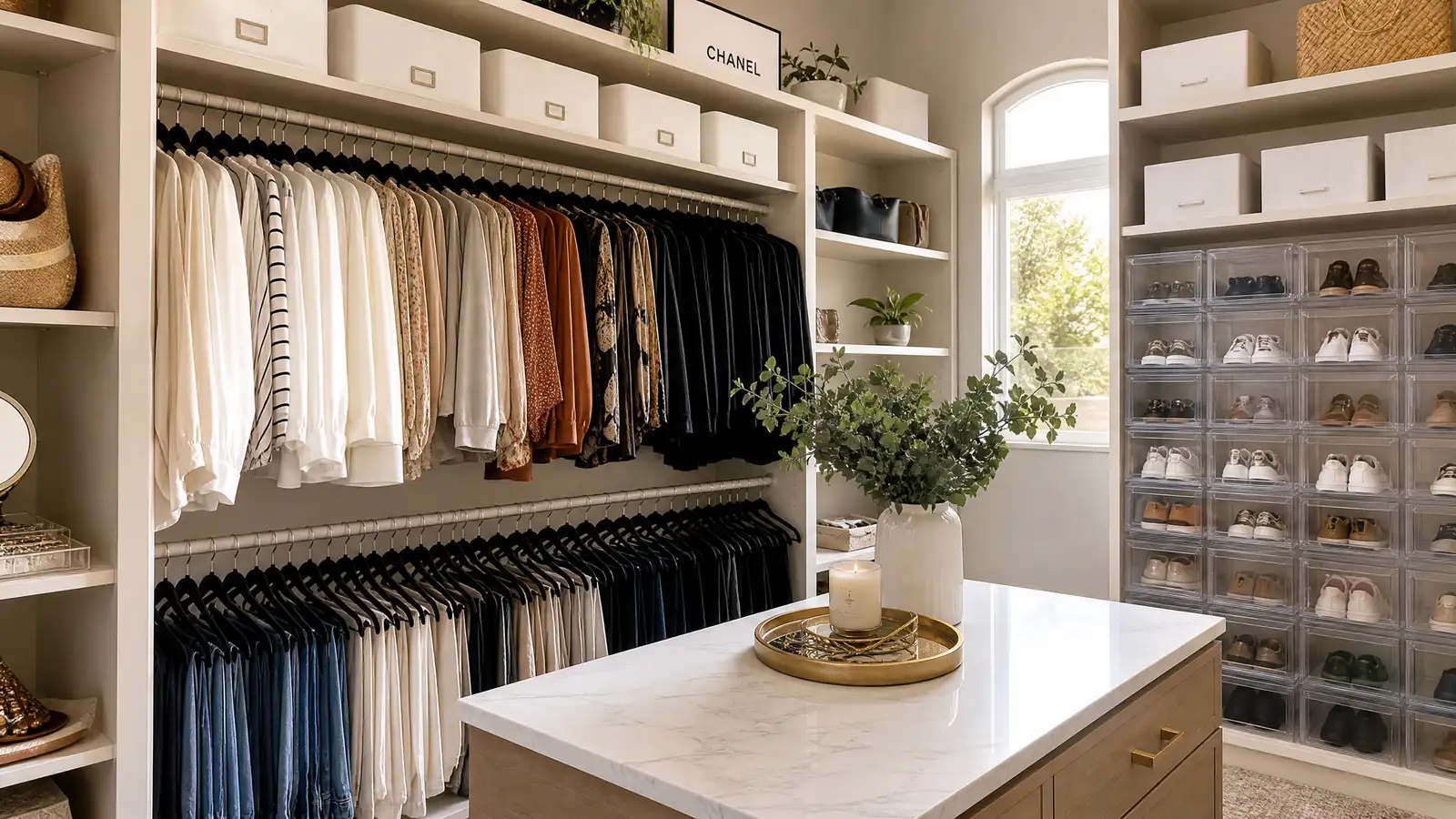
The single fastest upgrade you can make to any closet costs under thirty dollars. Velvet non-slip hangers are thinner than traditional plastic hangers, which means you fit more clothes on the same rod. But the real advantage is the velvet coating that keeps garments in place. Silk blouses, structured jackets, and lightweight dresses stop sliding off and falling into a heap at the bottom of the closet.
Organizers consistently recommend replacing every hanger in one batch rather than mixing old and new. Uniform hangers create visual consistency that makes the closet feel calmer the moment you open the door. And they save roughly twenty percent of horizontal rod space compared to bulky wooden or plastic alternatives.
2. Install a Double-Hang Rod Configuration
If your closet has a single rod spanning the full width, you are wasting at least half of your vertical storage. A double-hang rod splits the space into two levels: one for shorter items like shirts, blouses, and folded pants on hangers, and one below for skirts, shorts, or children clothing.
A standard double-hang kit from most hardware stores costs around twenty to forty dollars and installs in under an hour with basic tools. Measure the total height of your closet first — you need roughly forty to forty-two inches between each rod level. If your closet ceiling is lower than eighty inches, this setup becomes tight, and you should prioritize one full-length rod for dresses and coats instead.
3. Use Clear Stackable Shoe Boxes
Shoes on the closet floor are a tripping hazard and a visual mess. Clear stackable shoe boxes solve both problems by creating vertical shoe storage that lets you see every pair at a glance. The transparency means you never have to open a box to check what is inside, and the stackable design uses vertical space efficiently.
A set of six clear shoe boxes runs about fifteen to twenty-five dollars online. Place them on the bottom shelf of your closet or on the floor beside your hanging clothes. If you have more shoes than floor-level boxes can hold, add a simple wire or acrylic shelving unit above them to create a second tier.
4. Add Drawer Dividers to Existing Dressers
If your closet includes a dresser or chest of drawers, drawer dividers transform chaotic jumbles into organized categories. Without dividers, socks, underwear, belts, and accessories migrate into one another until every drawer contains a little bit of everything and nothing is easy to find.
Bamboo or acrylic divider sets cost around ten to twenty dollars. The key is measuring each drawer interior before buying — dividers that are too small shift around, and dividers that are too large do not fit. Group items by type: one section for everyday socks, one for undergarments, one for accessories. If you have a lot of scarves or ties, a dedicated narrow section prevents tangling.
5. Hang an Over-the-Door Organizer
Small closets benefit disproportionately from over-the-door organizers. These hanging units add storage without consuming any floor or shelf space. A typical over-the-door organizer features ten to twenty-four clear pockets that hold everything from shoes and accessories to cleaning supplies and seasonal items.
The price range is ten to twenty dollars. Mount one on the inside of your closet door and use it for items that are too small or too awkward for standard shelving: belts, scarves, handbags, or even rolled t-shirts. If your closet has a bi-fold door, a tension-rod version that hangs from the top edge works just as well without interfering with the folding mechanism.
6. Implement Under-Shelf Baskets for Vertical Gaps
Most closets have unused vertical space between shelves. Under-shelf baskets slide onto the underside of an existing shelf and create a second storage surface below it. They are ideal for lightweight items like folded sweaters, linens, or accessories.
These baskets cost roughly eight to fifteen dollars each and require no tools to install. Simply slide them onto the shelf edge and adjust the position. The limitation is weight capacity — do not overload them with heavy items, or the shelf above may bow. Think of them as bonus space for things that take up room but do not weigh much.
7. Create a Seasonal Rotation System
You do not need equal access to every piece of clothing all year round. Keep your current season front and center and store off-season items in a designated zone. In summer, heavy coats and winter sweaters go to the top shelf or into storage bins. In winter, shorts and summer dresses get moved out of the way.
Use matching storage bins labeled by season. A set of four to six large bins costs around twenty to thirty dollars. Place them on the highest shelf in your closet or under the bed if closet space is tight. The rotation takes about thirty minutes twice a year, and the result is a closet that never feels overcrowded because half your wardrobe is never competing for space.
8. Categorize with Baskets and Bins on Open Shelving
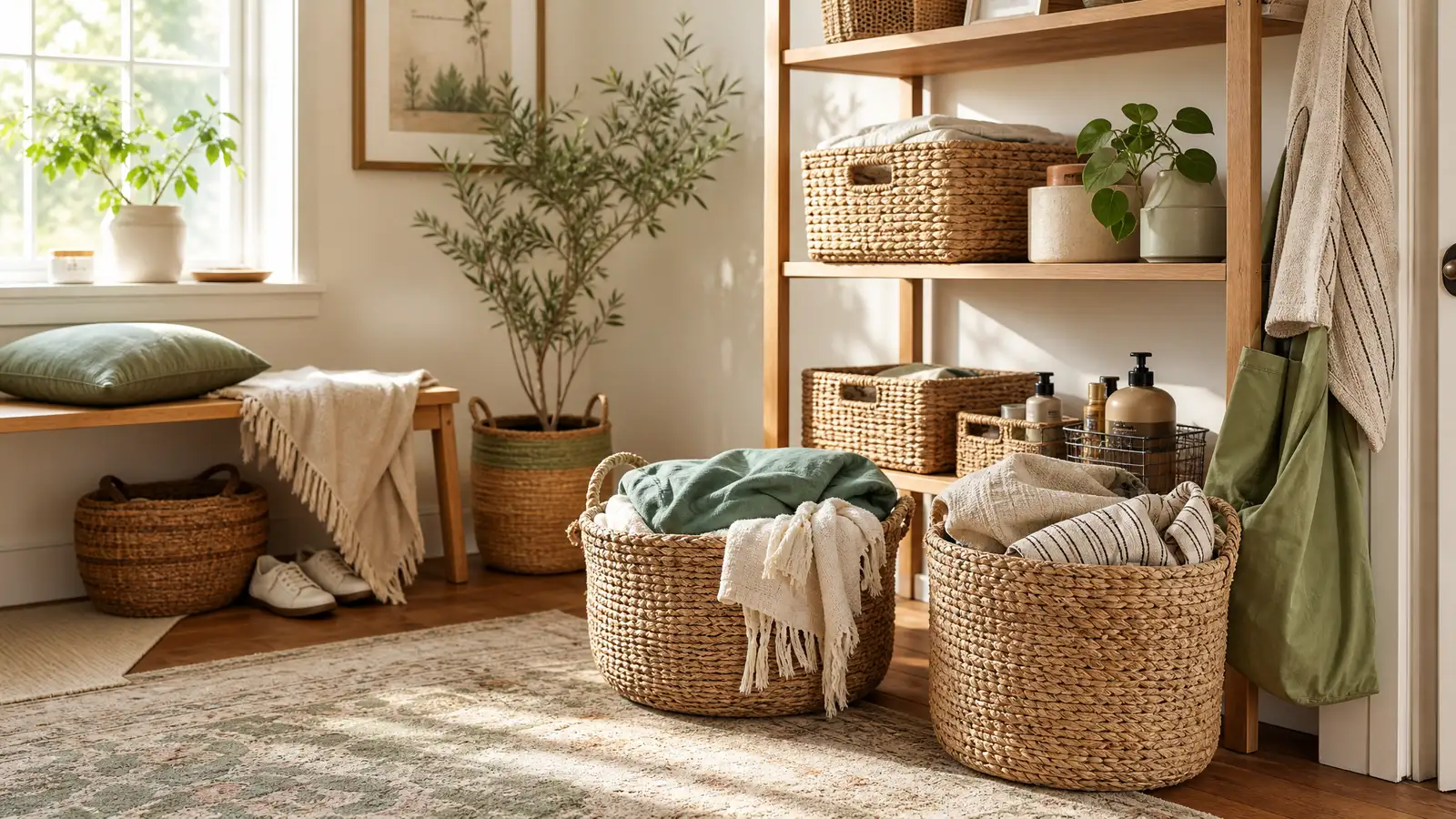
Open shelving in a closet is only as organized as the containers on it. Without baskets or bins, items on shelves tend to spread out and merge until the shelf looks like a random assortment rather than a system. Fabric baskets, woven bins, or plastic containers create defined zones that keep categories separated.
Choose bins that match the shelf depth — baskets that protrude too far forward look messy, and ones that are too shallow waste space. A set of three to five matching bins runs about twenty to thirty dollars. Label each bin so that anyone in the household can find and return items to the right place. Categories like workout clothes, loungewear, accessories, or travel items work well.
9. Add a Valet Rod for Tomorrow Outfits
Getting dressed is faster when your next outfit is already selected. A valet rod is a small extendable arm that mounts to the inside of your closet door or wall and holds one complete outfit — hanger, pants, and accessories — ready for the next day.
Valet rods cost around fifteen to twenty-five dollars and install with two screws. The habit of selecting and hanging tomorrow outfit before bed eliminates the morning scramble through the closet. It is a small addition that delivers daily value, especially for people who work from home and need to look presentable on short notice for video calls.
10. Audit and Edit Quarterly
No closet organization system survives without periodic maintenance. A quarterly audit takes about thirty minutes and involves three steps: remove everything that does not belong in the current zone, return displaced items to their correct bins or sections, and donate anything you have not worn in six months.
This habit is what separates people who stay organized from those who organize once and forget about it until the closet becomes chaotic again. Set a calendar reminder every three months. The fifteen minutes you invest in a quarterly audit saves hours of reorganization later.
Making It Stick
Closet organization is not a one-time project. It is a system that works when every item has a defined place and you respect those boundaries consistently. Start with the change that addresses your biggest frustration — whether that is tangled hangers, shoes everywhere, or an overstuffed dresser — and complete that single improvement before moving to the next.
The products recommended here are all affordable, most under thirty dollars. The total cost to implement all ten ideas typically falls under two hundred dollars. But the real value is not in the products themselves. It is in the daily experience of opening your closet and finding exactly what you need without searching. That feeling is worth far more than the price of a few bins and hangers.
Pick one idea from this list and implement it this weekend. When you see how much difference a single change makes, the rest will follow naturally.