The term “death cleaning” sounds alarming. It conjures images of grim finality, of giving up, of a morbid obsession with the end. But in Swedish culture, döstädning is none of those things. It is a practical, loving process of sorting through your belongings so that your family will not have to do it for you after you are gone.
Margareta Magnusson introduced the concept to English-speaking audiences in her book “The Gentle Art of Swedish Death Cleaning.” The title is intentionally disarming. She frames decluttering not as a minimalist aesthetic choice but as a final act of care for the people you love.
What Döstädning Actually Means
The Swedish word döstädning combines “dö” meaning death and “städning” meaning cleaning. But the concept is broader than either word suggests. It encompasses sorting, organizing, discarding, and distributing possessions with the awareness that you will not take them with you.
Magnusson, who was somewhere between eighty and one hundred when she wrote the book, describes the process with warmth and humor. She writes about finding her husband’s secret stash of screws in the garage after he died, about the absurd quantity of kitchen gadgets accumulated over decades, about the relief of letting go of things that no one in the family actually wants.
The core insight is simple. Your children do not want your collection of souvenir spoons. They do not want your college textbooks from forty years ago. They do not want the boxes of paperwork you kept just in case. They will have to deal with all of it eventually. Doing the work yourself, while you are able, is a gift to them.
Why It Is Thoughtful, Not Morbid
The cultural resistance to death cleaning in many countries comes from conflating acknowledgment of death with giving up on life. Swedish culture tends to be more pragmatic about mortality. Döstädning is not about preparing to die. It is about living with less burden and leaving less burden behind.
Think of it this way. If you knew a loved one would have to spend months sorting through your belongings while grieving your loss, would you want to spare them that pain? Most people answer yes immediately. That is the emotional logic of death cleaning. It reframes decluttering from a chore into an act of kindness.
Starting the Conversation
Death cleaning often begins with a conversation. Magnusson recommends telling your family what you are doing and why. This transparency prevents the awkward misunderstanding of walking into someone’s home and finding half the furniture gone.
The conversation can be light. You might say, “I am going through my things to make things easier for all of you someday. Is there anything you would like me to set aside for you?” This question often surprises people. They have never been asked what they actually want from a parent’s or grandparent’s home. The answers can be revealing. Someone wants the cast iron skillet. Someone wants the photo albums. Nobody wants the china set that has lived in a cupboard for twenty years.
These conversations surface family preferences that would otherwise remain unknown until it is too late to act on them.
Practical First Steps
Do not start with sentimental items. Starting with the most emotionally charged category guarantees overwhelm and abandonment of the project. Begin instead with the easy categories.
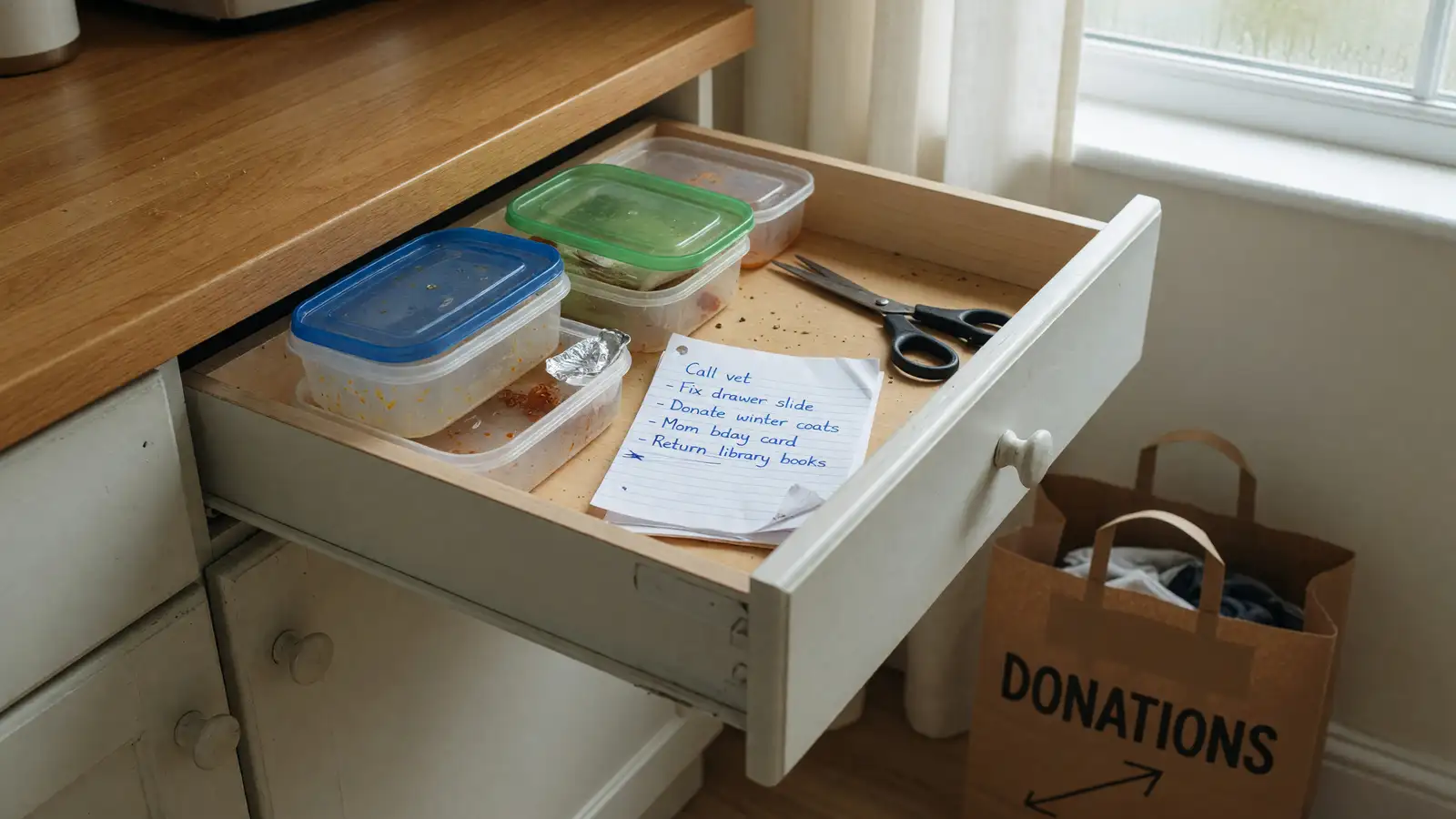
Start with the kitchen. Expired food, duplicate utensils, appliances used once in 2015, chipped mugs, mismatched storage containers with missing lids. These items carry almost no emotional weight. Discarding them builds momentum and the psychological muscle of letting go.
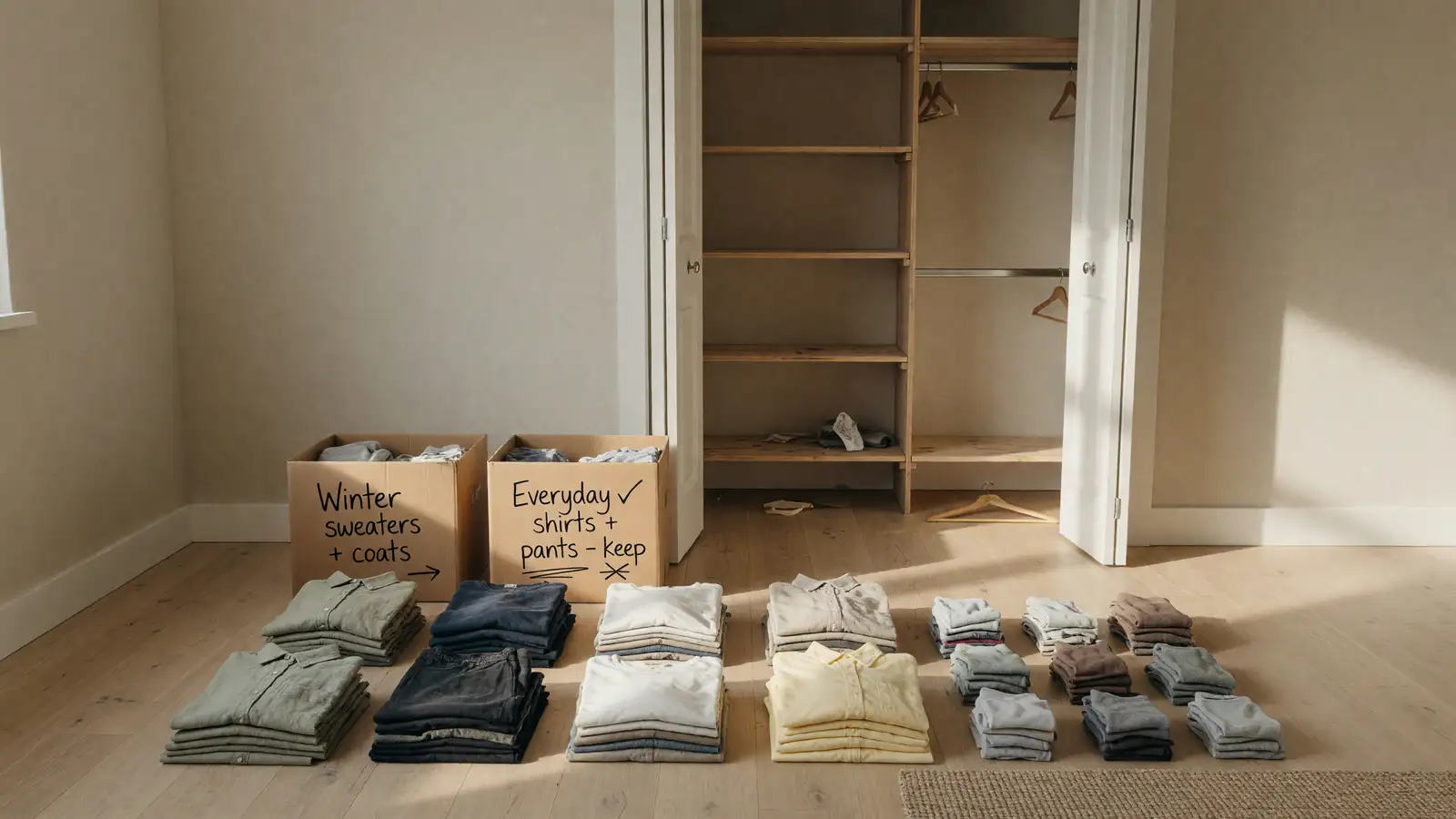
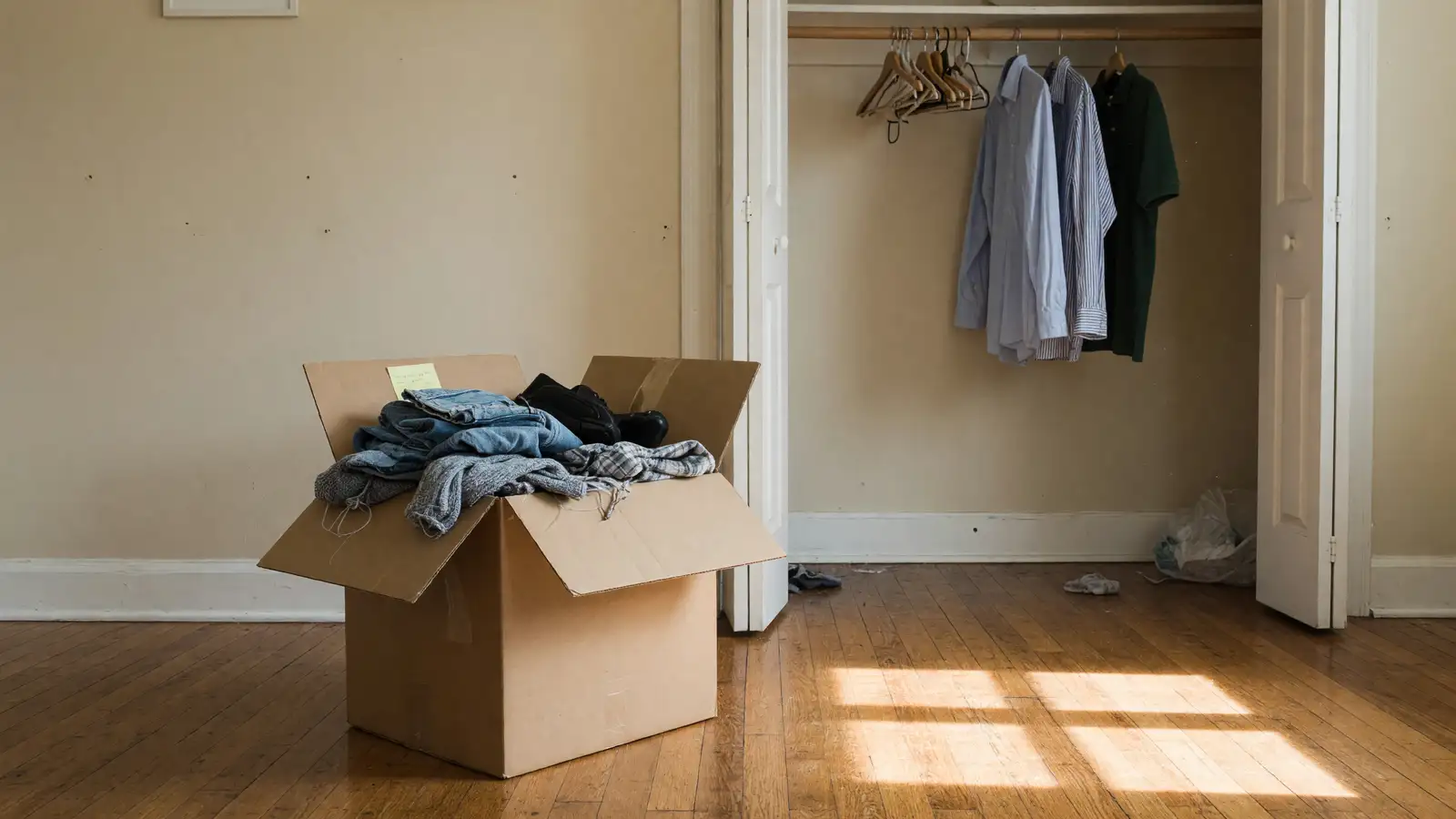
Move next to clothing. Clothes that no longer fit, styles from decades past, shoes that hurt, formal wear for occasions that no longer arise. Clothing is moderately emotional but still manageable. The rule of thumb: if you would not wear it to meet a friend for coffee this week, it can go.
Books come third. Books feel personal but most of them are not. The paperbacks read once and never touched again, the reference books outdated by the internet, the bestsellers that everyone bought and nobody liked. Keep the books you genuinely revisit or that hold specific meaning. Release the rest to library sales and Little Free Libraries.
Papers and documents are the tedious but essential category. Tax returns older than seven years, manuals for appliances you no longer own, greeting cards without deep sentimental meaning, old bills and bank statements. A shredder and a few hours of focused attention clear this category.
Only after the easier categories are handled should you approach sentimental items. The goal here is not to become a minimalist with no keepsakes. The goal is to curate. Keep the letters from your spouse during deployment, the drawing your child made at age four that caught something true, the small object that instantly transports you to a specific moment. Release the items that carry guilt rather than joy, the things you kept because someone gave them to you and you felt obligated.
The Timeline
Death cleaning is not a weekend project. Magnusson suggests it can take months or years, done in gentle sessions rather than marathon purges. The process should not feel punishing. If a session becomes emotionally draining, stop. Have tea. Come back another day. The work will wait.
This gradual approach is what distinguishes death cleaning from extreme decluttering methods. It honors the emotional weight of a lifetime of possessions. There is no thirty-item countdown or two-week challenge. There is just steady, kind, consistent progress.
Swedish death cleaning is ultimately a practice of love. Love for your family, who will not have to sort through your things while grieving. Love for yourself, who gets to make the decisions about what matters. And love for the objects themselves, which get to move on to new homes and new uses rather than sitting untouched until someone else throws them away.