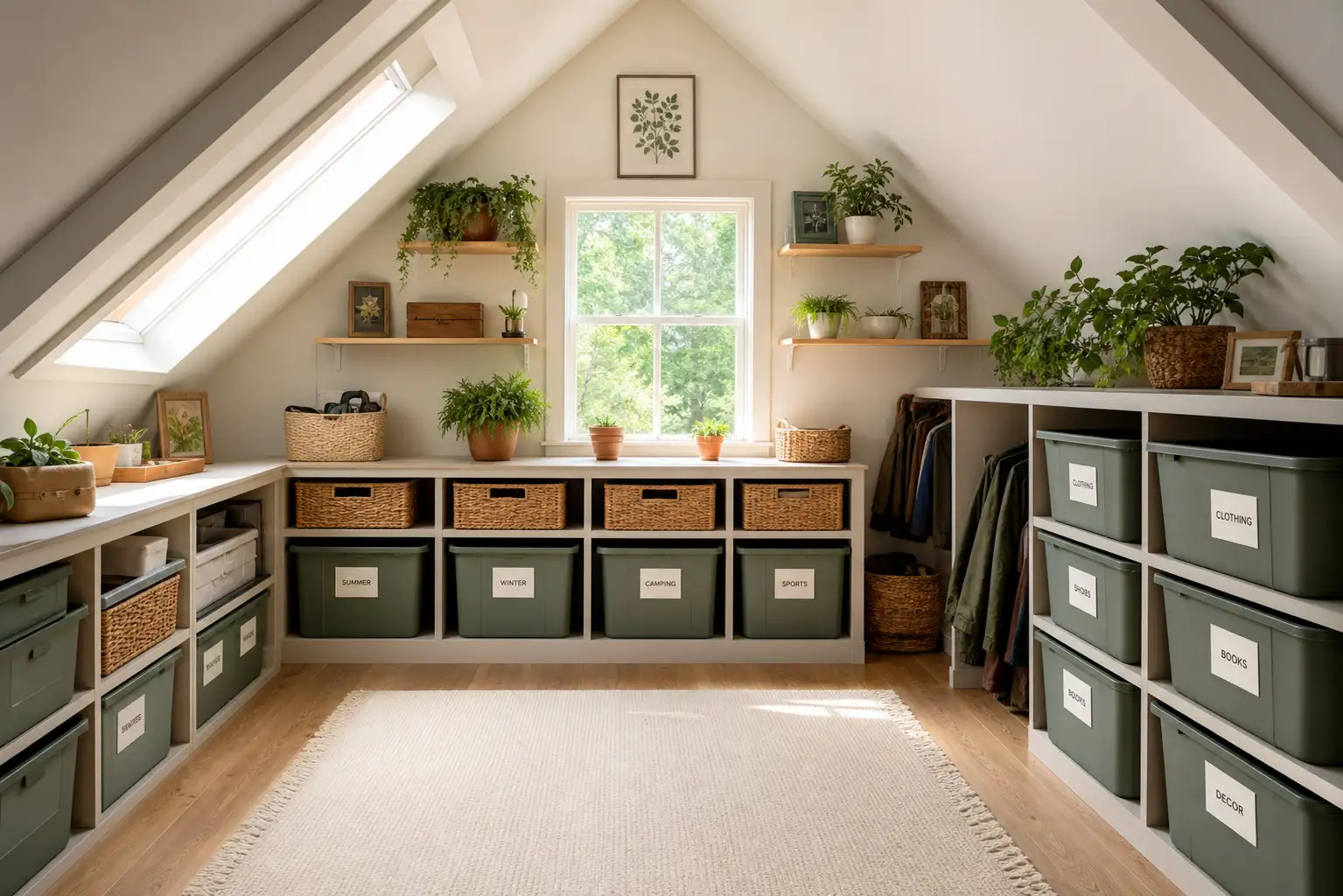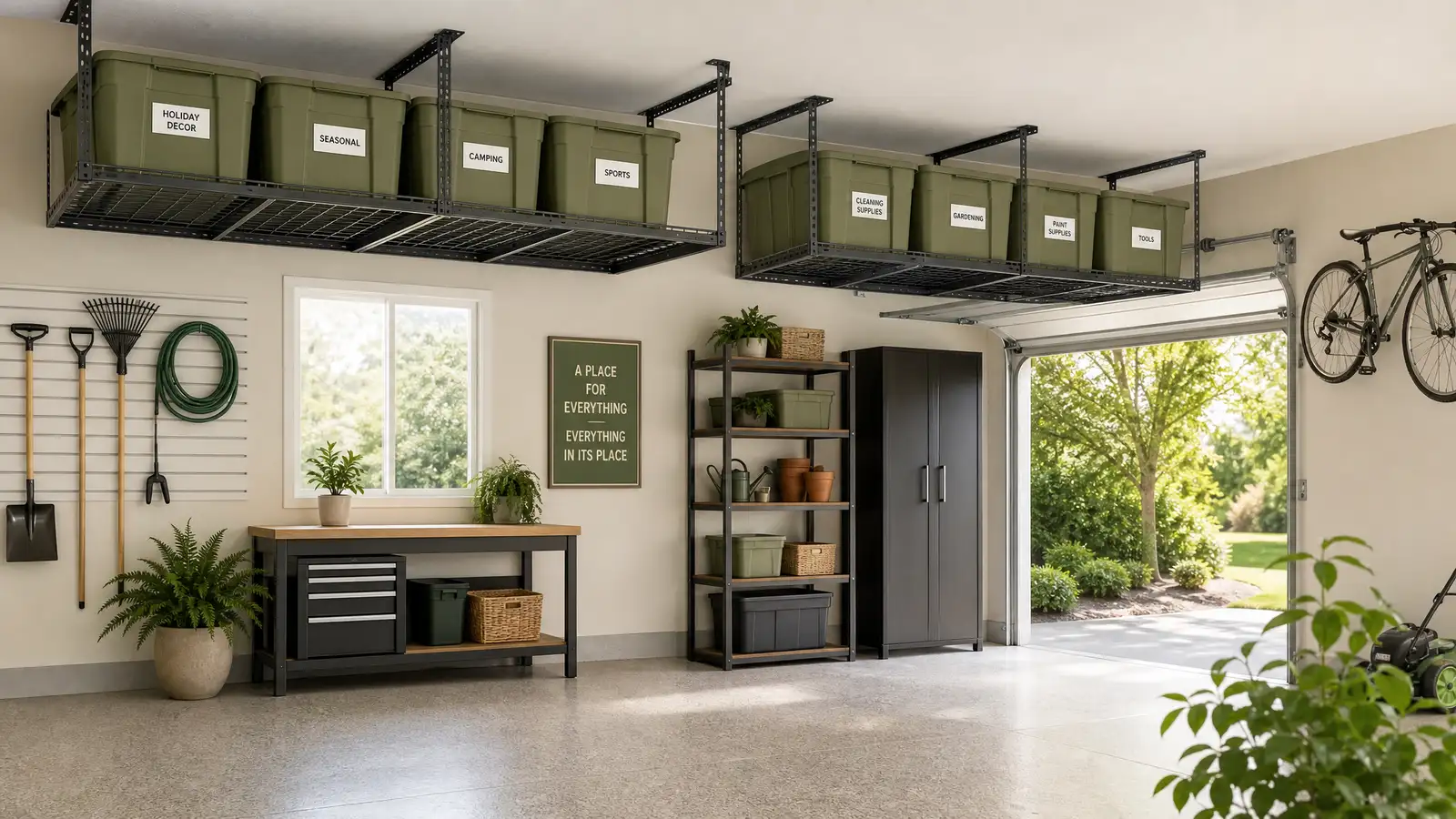
Seasonal decorations occupy a unique category in home storage. They are used for roughly one month per year and stored for eleven. The storage needs to protect fragile items from damage and dust, keep everything organized so the next holiday setup is fast rather than frustrating, and not consume prime living-space storage for items that are accessed so rarely.
The attic, basement, garage, or a dedicated storage closet are the natural homes for seasonal decor. The challenge is that these spaces are often the least organized areas of the home. Here is how to make seasonal storage work.
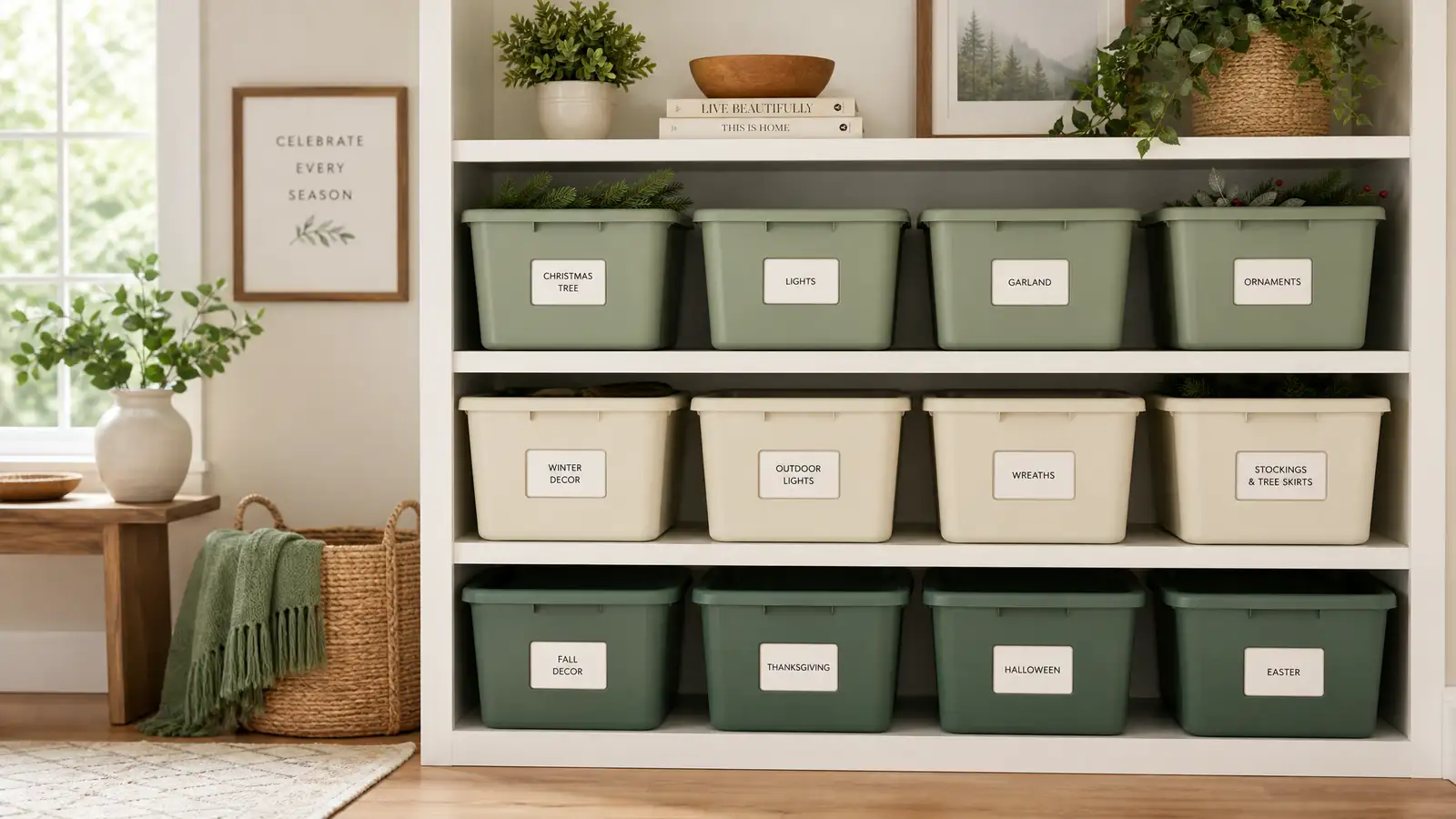
The Holiday-Specific Bin System
Each major decorating holiday gets its own clearly labeled bins. Christmas ornaments in one set of bins. Halloween decorations in another. Generic seasonal decor — spring florals, autumn leaves, summer entertaining items — in their own categories. The bins are color-coded or labeled with large, visible tags so you can identify which holiday you are pulling down from the attic shelf without moving everything.
The bin size matters. Large bins hold more but become too heavy to safely lift from overhead shelves or carry down attic stairs. The standard sixty-six quart bin is the maximum practical size for most people. For heavy items like ceramic villages or cast iron decor, smaller bins prevent overloading.
Clear bins are worth the premium over opaque ones. The ability to see contents without opening lids means you can confirm you have the right bin before pulling it down, which saves time and physical effort. For bins that must be opaque due to light sensitivity of contents, a detailed label on multiple sides eliminates the guesswork.
Ornament and Fragile Item Storage
Christmas ornaments and other fragile decorations require more protection than simply being placed in a bin. A divided ornament storage box with individual compartments for each ornament prevents the contact that causes chips and breaks. These boxes are available specifically for ornament storage and have adjustable dividers that accommodate different ornament sizes.
For a budget alternative, cardboard cup dividers — the kind used in shipping boxes for glasses — create individual compartments inside a standard bin. Each ornament wrapped in tissue paper and placed in its own compartment is as protected as in a dedicated ornament box.
String lights are the most frustrating seasonal item to store because they tangle into knots that take longer to untangle than the entire decorating process. Wrap each string around a rectangular piece of cardboard — a cut-down shipping box works perfectly — and secure the end. The flat cardboard stores easily in a bin, and the lights unwind in seconds next year.
The Rotation Strategy
Seasonal decor should be stored in order of the calendar year. The bin for the next upcoming holiday goes in the front or on top. The bin for the holiday that just passed goes to the back or bottom. When you pull out Halloween decorations, you move the Christmas bin to the front position. The rotation keeps the next-needed items accessible.
A master inventory list taped to the inside of the storage area door or to the top bin tracks what is stored where. The list prevents the common scenario of buying duplicate decorations because you could not remember whether you already owned a fall wreath or a set of Easter egg dye.
Seasonal storage is an annual rhythm. When decorations go back into storage at the end of each season, take the opportunity to declutter. Anything broken beyond repair goes in the trash. Anything you did not display this year and cannot imagine displaying next year gets donated. The annual declutter prevents the accumulation of decorations you no longer love from consuming storage space that could hold decorations you actively look forward to using.