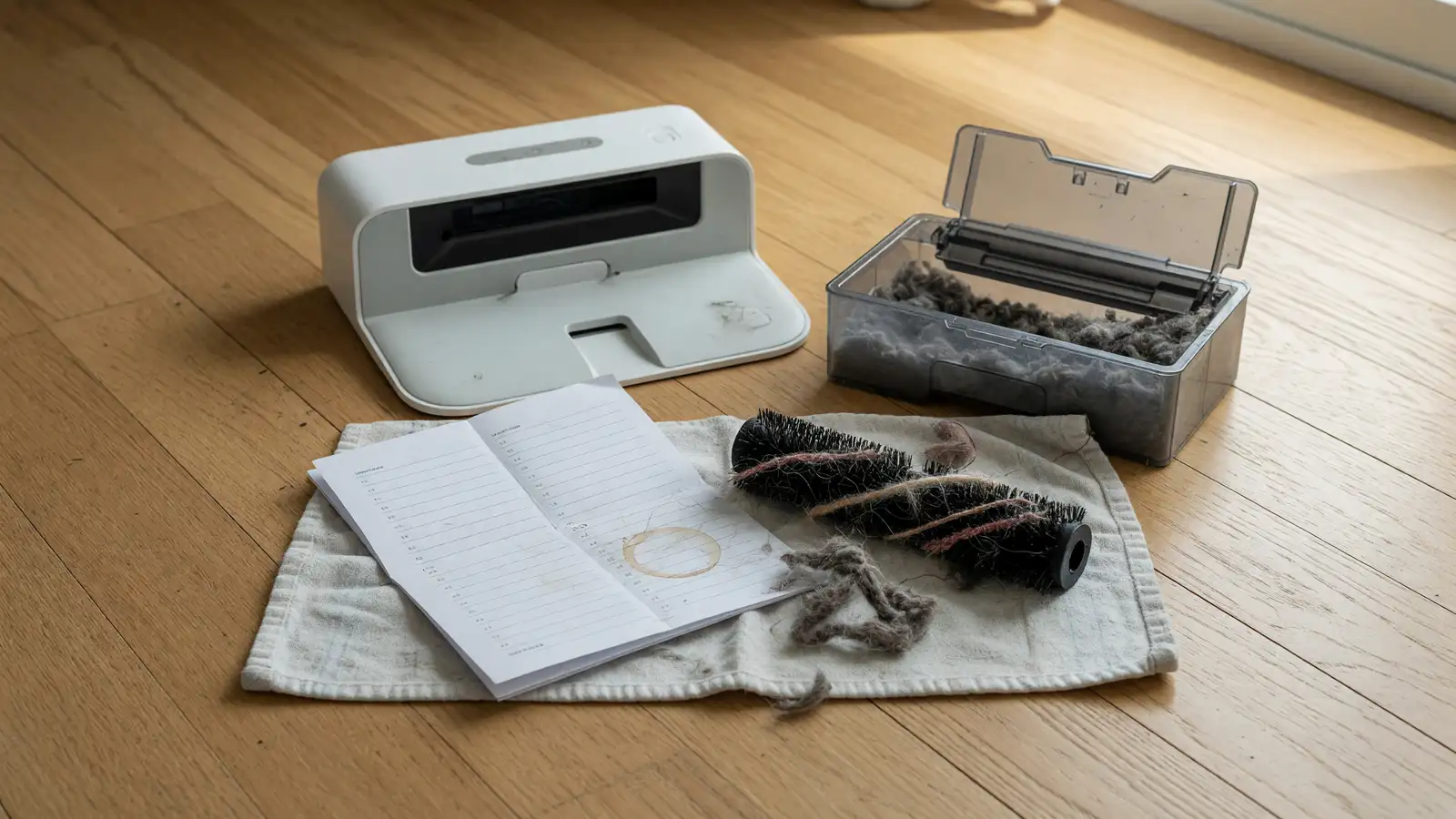
The robot vacuum market in 2026 looks nothing like it did five years ago. What started as bumbling discs that randomly bounced off baseboards has evolved into a category of genuinely capable autonomous cleaners. The latest models navigate with LiDAR precision, mop with self-cleaning rollers, and dock themselves for emptying, washing, and drying without human intervention.
If you are shopping for a robot vacuum or mop this year, the sheer number of options can feel overwhelming. Here is what actually matters when comparing models.
Navigation: The Difference Between Cleaning and Wandering
Navigation technology is the single biggest factor separating a robot that actually cleans your floors from one that just moves around. Entry-level robots use a combination of bump sensors and gyroscopes to navigate, essentially cleaning in random patterns and hoping for the best. They will get your floors somewhat cleaner, but they will miss spots regularly and take far longer than necessary.
Mid-range models use visual SLAM, where an onboard camera maps your home’s layout and plans efficient cleaning paths. These robots clean in straight, organized rows rather than random zigzags, and they can typically remember multiple floor plans.
The premium tier uses LiDAR, the same laser-based ranging technology found in self-driving cars. LiDAR-equipped robots build precise three-dimensional maps of your home in real time, even in complete darkness. They navigate around obstacles with centimeter-level accuracy and can be directed to clean specific rooms or zones through a companion app. For homes with complex layouts or multiple levels, the LiDAR premium is almost always worth paying.
Mopping Has Come a Long Way
The most significant advancement in the past two years has been in mopping capability. Early robot mops dragged a damp microfiber pad across floors, which was roughly equivalent to pushing around a wet sock. The results were somewhere between useless and actively spreading dirt around.
Modern models use rotating or vibrating mopping pads that apply downward pressure and scrub at several hundred oscillations per minute. Some premium models, like the YEEDI and Roborock flagships, now feature self-cleaning roller mops that continuously wash themselves with fresh water during operation. These systems can distinguish between carpet and hard flooring, automatically lifting the mopping pad when transitioning to carpeted areas.
The self-cleaning dock has become the killer feature of 2026. After each cleaning session, the robot returns to a base station that empties the dust bin, washes the mopping pads with fresh water, and dries them with warm air. This eliminates the one ongoing chore that made robot vacuums feel like they required as much maintenance as they saved.
Key Specs That Actually Matter
Battery life determines coverage area, but manufacturers’ claims can be misleading. A robot rated for 180 minutes of cleaning time in a lab with no obstacles will get substantially less runtime in a furnished home. For homes over 2,000 square feet, look for models with recharge-and-resume capability, where the robot returns to its dock mid-clean, recharges, and picks up exactly where it left off.
Suction power measured in Pascals is the standard metric, but raw numbers do not tell the full story. A robot with 5,000 Pa of suction but poor brush design will underperform a 3,000 Pa robot with well-engineered roller brushes. Focus on reviews that test on actual carpet with embedded debris rather than comparing spec sheets.
Object avoidance has become a differentiating feature at every price point. Cameras and AI processors now allow robots to recognize and avoid pet waste, cables, socks, and shoes. The real-world performance varies dramatically between brands, and this is one area where paying for a premium model delivers immediate, tangible benefits. A robot that requires you to pre-clean the floor of obstacles defeats half the purpose of owning one.
Integration and Smart Features
All modern robot vacuums connect to smartphone apps, but the quality of those apps varies enormously. The best apps allow you to set no-go zones, schedule room-specific cleaning, adjust suction and water flow per room, and view cleaning history maps. The worst apps lose connection to the robot every few days and require a full re-pairing process.
Voice assistant integration is nearly universal now, with most models supporting both Alexa and Google Assistant for basic commands. For Apple users, HomeKit support remains spotty and should be verified before purchase.
The Real Cost of Ownership
The purchase price is only part of the equation. Replacement filters, brushes, and mopping pads represent an ongoing cost that varies significantly by brand. Some manufacturers bundle a year’s worth of consumables with the robot; others charge premium prices for proprietary replacement parts.
Battery degradation is the hidden long-term cost. Lithium-ion batteries in robot vacuums typically last two to three years of regular use before runtime drops noticeably. Check whether the battery is user-replaceable before buying, or budget for a replacement down the line.
A robot vacuum will not replace your upright vacuum entirely. Even the best models cannot clean stairs, upholstery, or tight corners. But they dramatically reduce the frequency with which you need to do those tasks yourself. For many households, that trade-off is well worth the investment.