The home organization industry runs on a quiet contradiction. It sells you the idea that clutter is the problem, then sells you bins, baskets, drawer dividers, shelf risers, and closet systems to solve it. You declutter. You organize. And somewhere in the process, you acquire more stuff — the organizing stuff — than you had when you started.
I tried something different last month. For 30 days, I didn’t buy a single organizing product. No bins from the container store. No new shelving units. No “game-changing” drawer organizers I saw in a YouTube video. The rule was simple: if I couldn’t store it with what I already owned, I had to get rid of something else to make room. No exceptions, no cheat days, no “this one doesn’t count because it’s on sale.”
Here’s what the month taught me about minimalism, clutter, and the industry that profits from both. It also taught me something I wasn’t expecting: that most of what I thought of as “organizing” was actually just creative procrastination from the harder work of letting things go.
Week one: the withdrawal
The first week was uncomfortable. I had gotten used to solving storage problems by buying things. Drawer messy? Buy dividers. Closet overflowing? Buy a hanging organizer. Pantry chaotic? Buy matching containers. Each purchase gave me a small dopamine hit — the feeling of taking action against the mess — and masked the real issue, which was that I owned too much stuff for the space I lived in.
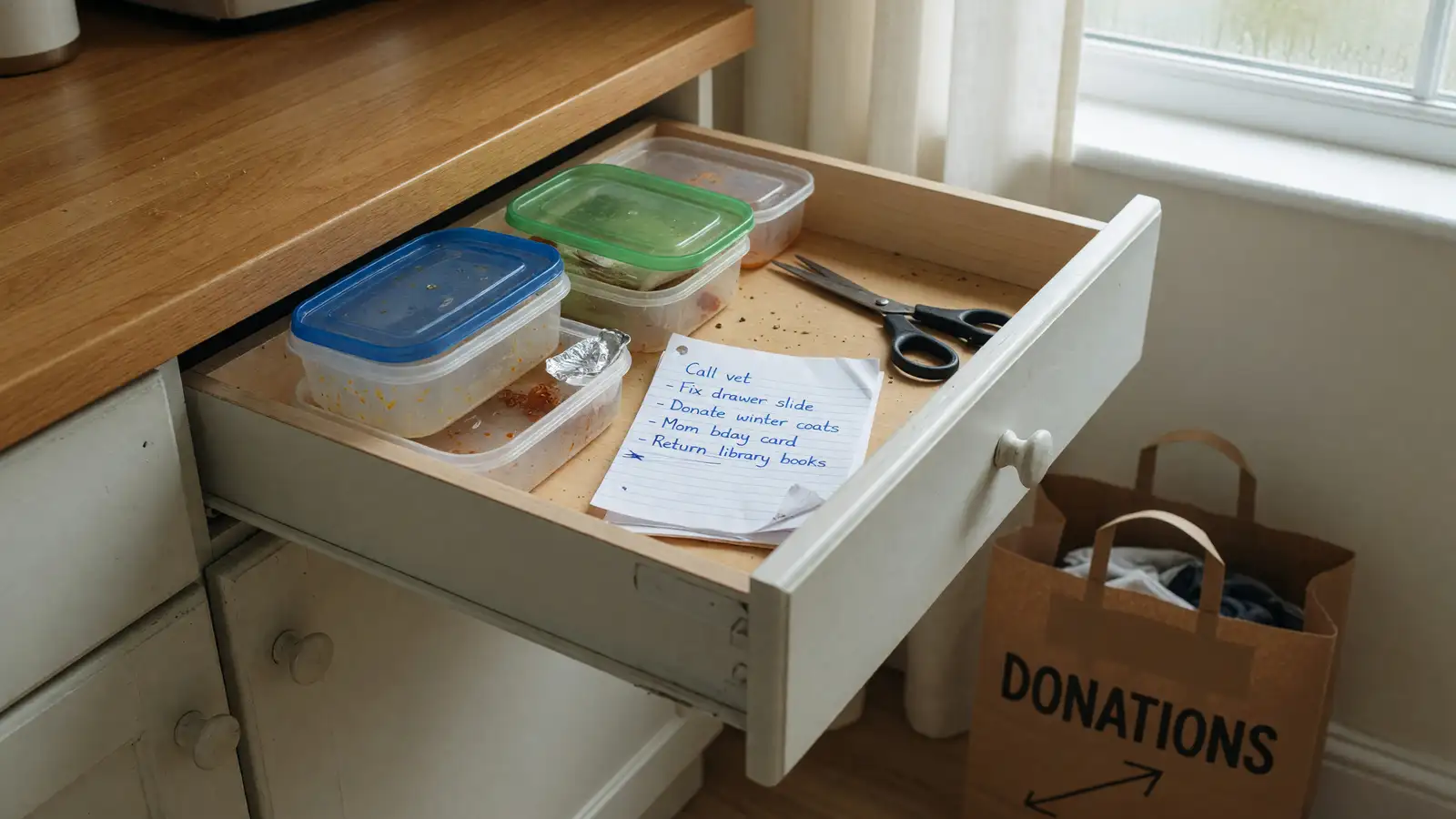
Without the ability to buy organizing products, I had to confront the actual volume of my belongings. It was more than I thought. Way more. I counted 14 water bottles. Eight reusable shopping bags. Kitchen gadgets I hadn’t used since 2022. Clothes with tags still attached. The organizing products I already owned — bins, baskets, drawer units — had become part of the clutter rather than a solution to it. They were full of things I never used, in spaces I never looked at, organized in a system I had long stopped maintaining.
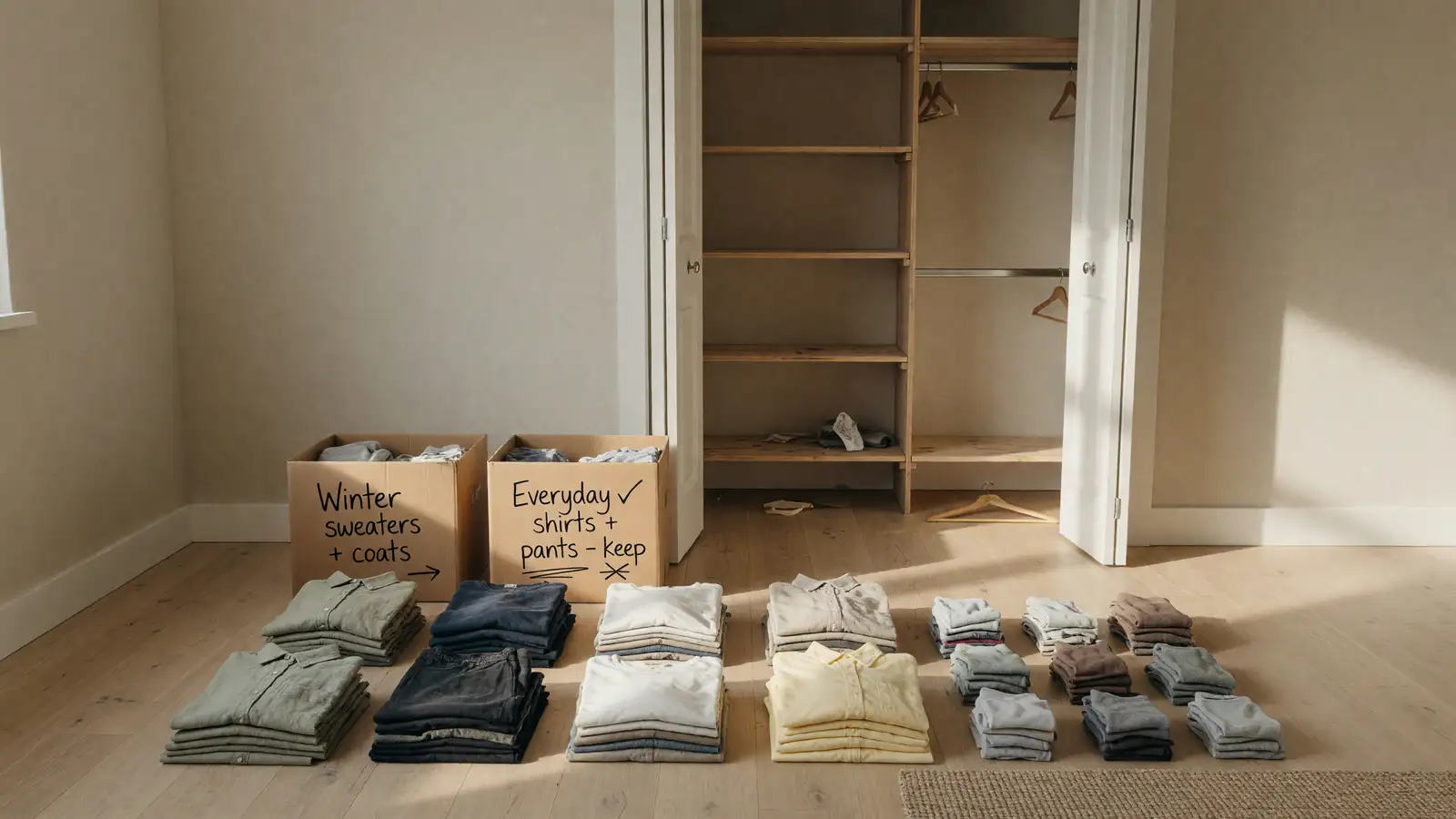
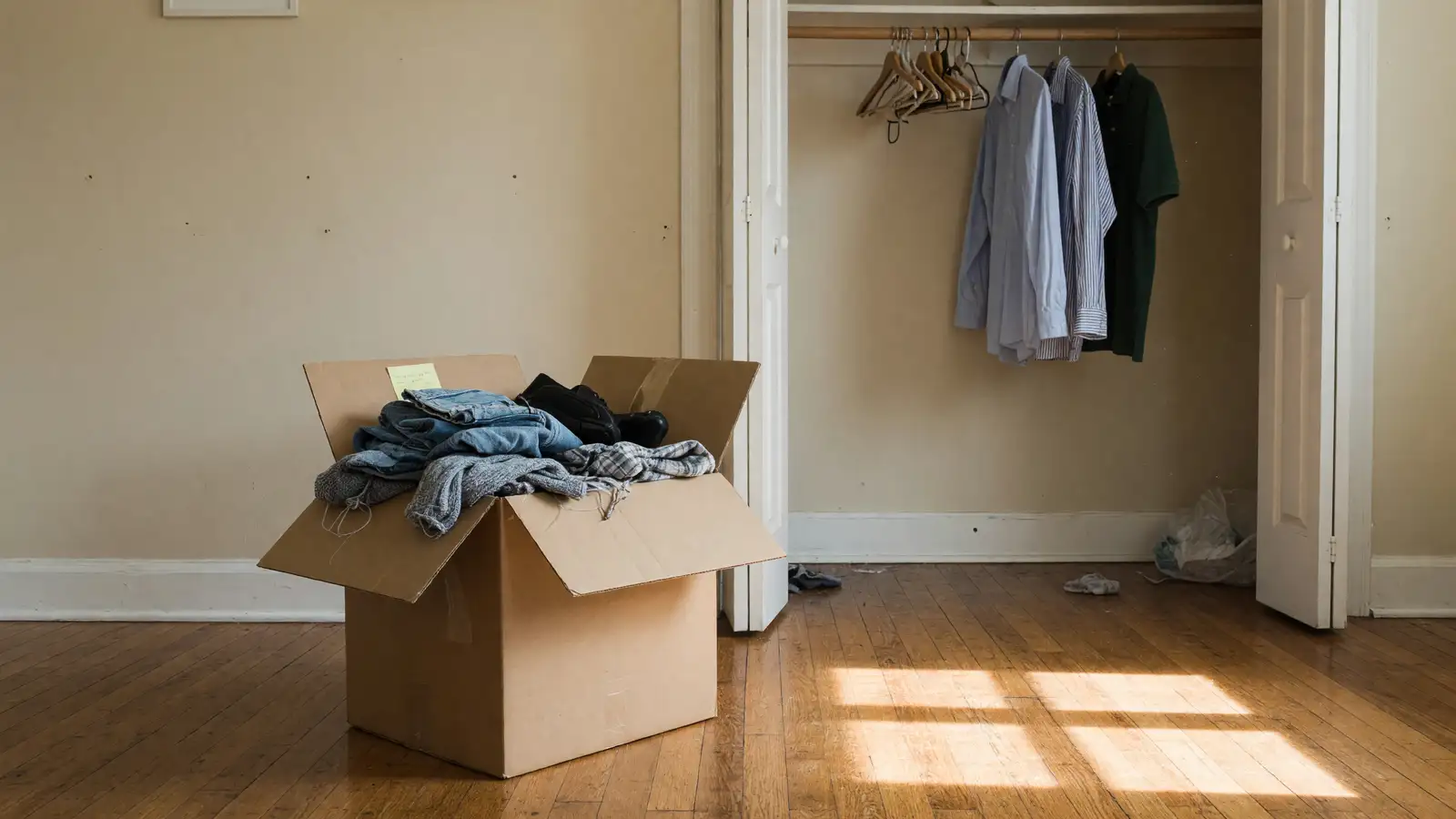
By day three, I started a box. Anything I hadn’t used in six months went in. By day seven, the box was full, and I had made exactly zero progress on the storage problem because I kept finding more things I didn’t need. The organizing products weren’t the answer. They were a permission structure for keeping things I should have let go of years ago.
Week two: the realization
Somewhere around day ten, the shift happened. I stopped looking at my apartment as a storage problem and started seeing it as a curation problem. The question wasn’t “how do I fit all this stuff?” It was “why do I have all this stuff?”
The answer, for me, was a combination of aspirational clutter and fear of scarcity. Aspirational clutter is the stuff you buy for the person you want to be — the bread maker for the person who bakes, the yoga blocks for the person who does morning yoga, the art supplies for the person who’s creative on weekends. Fear of scarcity is the stuff you keep because you might need it someday — the extra phone chargers, the spare buttons, the instruction manuals for appliances you no longer own.
Both categories are lies you tell yourself. The bread maker is not going to make you a baker. Keeping three extra phone chargers is not going to save you when all three of your current chargers simultaneously fail. These are emotional attachments disguised as practicality, and they fill up your space while adding nothing to your life.
Without the escape hatch of buying more storage, I had to sit with those lies until they stopped being convincing. It took about two weeks.
Week three: the purge
By week three, the box had become four boxes. I wasn’t being ruthless — I was being honest. Did I use this? No. Would I use it in the next six months? Probably not. Was I keeping it because I needed it or because getting rid of it felt like admitting I’d wasted money? Almost always the latter.
The sunk cost fallacy is the organizing industry’s best friend. You spent $40 on that bread maker, so getting rid of it feels like throwing away $40. But the money is already gone. Keeping the bread maker doesn’t bring it back — it just costs you the square footage it occupies, the mental energy of seeing it every time you open the cabinet, and the low-grade guilt of knowing you’re not using something you bought with intention.
I donated the bread maker. Someone else will use it. Someone who actually bakes.
The four boxes went to a donation center on day 21. My apartment didn’t look dramatically different — I hadn’t gotten rid of furniture or anything large — but it felt different. Cabinets opened and closed without things falling out. Drawers had space in them. I could see everything I owned in the kitchen without moving things around. That feeling of visual calm is what minimalism is actually selling, and you can’t buy it in a container store.
I also noticed a change in how I shopped. Without the organizing-product safety net, I started asking a different question before buying anything: “Where will this live?” Not “where will I put it” — I had plenty of space after the purge. But “where does this thing belong in my actual daily life?” If I couldn’t picture a specific shelf, drawer, or surface where it would sit and get used regularly, I didn’t buy it. This filter eliminated about 80% of my impulse purchases before they even reached the cart. It turns out most things we buy don’t have a natural home in our lives. They just get wedged into whatever space is available, and then we buy organizing products to make the wedging look intentional.
Week four: the new normal
The last week was the easiest. The impulse to buy organizing products had faded. I had developed a new reflex: when something felt cluttered, my first move was to remove things rather than rearrange them. It’s a faster process. It costs nothing. And it actually solves the problem instead of repackaging it.
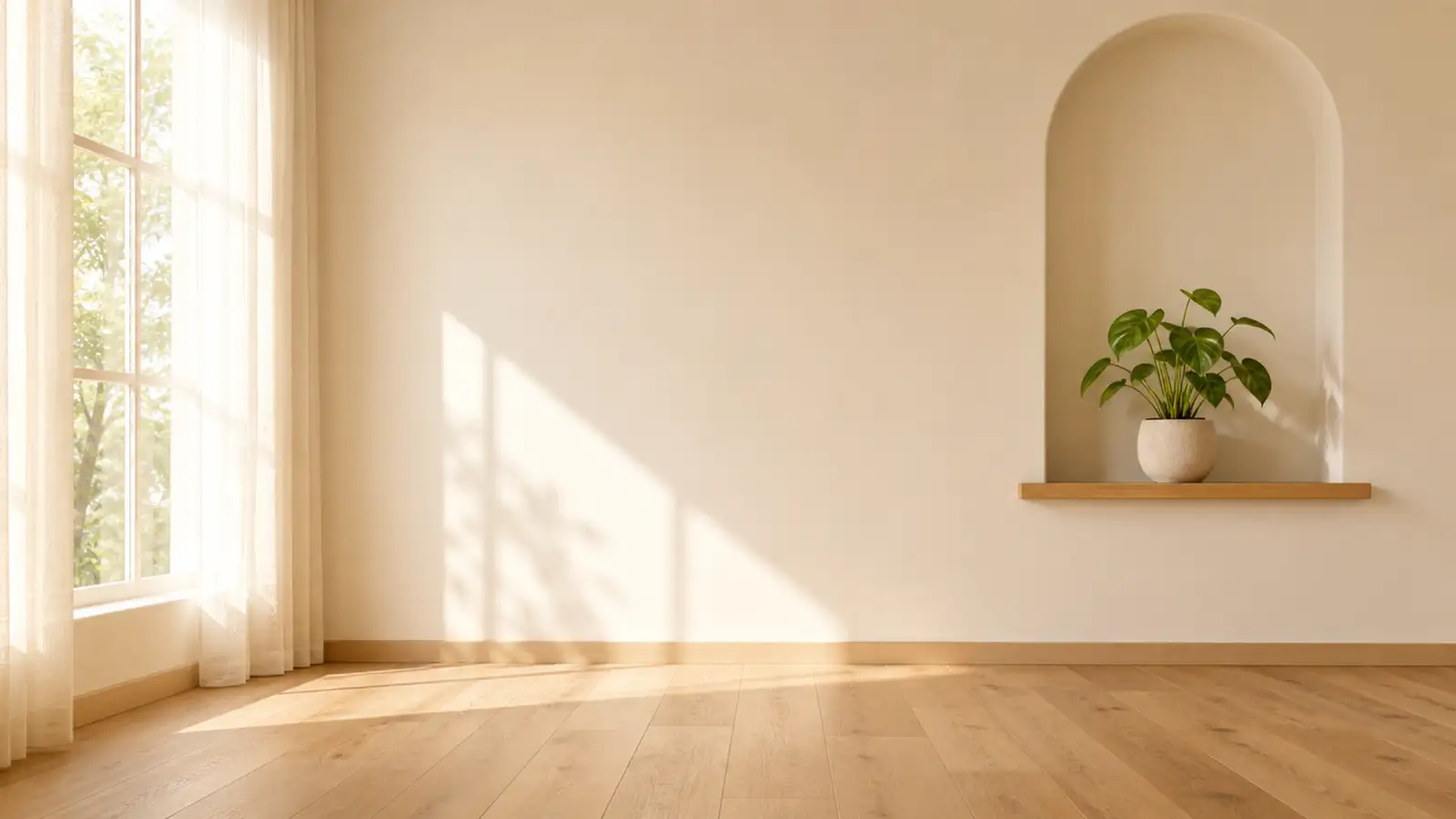
I did make one exception to the no-buy rule during week four. I bought a single houseplant. Not because I needed it — because the space that opened up after the purge felt like it could hold something intentional rather than something I’d forgotten about. The plant sits on a shelf that used to hold a stack of books I’d already read and a collection of candles I’d never lit. It looks right.
What I learned
The organizing industry has a business model that depends on you never actually finishing. If you solved your clutter problem permanently, you’d stop buying bins. So the products are designed to make you feel like you’re making progress while the underlying issue — too much stuff — goes unaddressed.
This isn’t a conspiracy theory. It’s how consumer product categories work when the problem they solve is self-perpetuating. The Container Store doesn’t market itself as a place you visit once and never return to. The entire category is built on the premise that organization is an ongoing project — something you maintain, refresh, and upgrade. New seasons bring new color-coordinated bin collections. New trends bring new folding techniques that require new tools. The message is always the same: you’re one purchase away from the organized life you want.
But the organized life isn’t something you buy. It’s something you do. Specifically, it’s something you stop doing — you stop acquiring, stop accumulating, stop treating every empty surface as a storage opportunity. The nothing-new challenge forces you to confront this because it removes the purchase option entirely. When you can’t buy your way out of a cluttered drawer, you have to empty it, sort it, and get rid of most of what was in it. When you can’t buy a new shelving unit for the basement, you have to decide which of the things currently on the floor down there are actually worth keeping. The process is uncomfortable because it reveals that most of your storage problems are actually ownership problems. You don’t need more space. You need less stuff occupying the space you already have. That’s a harder truth to sit with than “I should buy another bin,” which is why most people prefer the bin.
I also noticed something about the emotional weight of stuff. Getting rid of things I’d spent money on felt bad in the moment — a small sting of failure or waste. But a week later, I couldn’t remember what I’d gotten rid of. Not a single item. The emotional attachment that had kept me holding onto those things for years evaporated almost immediately once they were gone. The fear of regret was worse than regret itself. I suspect this is true for most people and most possessions. The thing you’re keeping “just in case” is costing you more in mental real estate than it would cost to replace if the one-in-a-thousand scenario actually happened.
The nothing-new challenge broke that cycle for me. Not because I achieved some enlightened state of minimalism — I still own too many coffee mugs — but because it forced me to solve storage problems with subtraction instead of addition. Subtraction is harder in the moment but easier to maintain. Addition is easier in the moment but creates more work forever.
If you try this yourself, the 30 days will probably follow the same arc mine did: a rough first week where you realize how much you own, a second week where you start questioning why, a third week where you actually get rid of things, and a fourth week where the new habits start to feel natural. The container store will still be there when you’re done. You might find you don’t need it anymore. And if you do go back, you’ll walk in knowing exactly what you need — not what the displays are designed to make you think you need. That shift, from impulse buyer to intentional visitor, is the whole point.