Walk down the cleaning aisle of any supermarket and you will find dozens of specialized products, each promising to solve a specific cleaning problem. Glass cleaner, tub and tile spray, disinfecting wipes, stainless steel polish, granite cleaner, wood floor solution. The total cost for one of each can easily exceed a hundred dollars, and the cabinet under your sink becomes a chemical storage facility.
Natural cleaning simplifies all of this. With five basic ingredients — white vinegar, baking soda, castile soap, hydrogen peroxide, and essential oils — you can make effective cleaners for every surface in your home. The recipes are simple, the cost is a fraction of commercial products, and you never have to wonder what mysterious chemicals you are spraying around your family.
The Five-Ingredient Pantry
White vinegar is the workhorse of natural cleaning. Its mild acidity dissolves alkaline residues like hard water deposits, soap scum, and mineral buildup. It also deodorizes effectively — the sharp vinegar smell dissipates completely as it dries, taking other odors with it. The one surface to avoid is natural stone like marble and granite, where the acid can etch the finish.
Baking soda provides gentle abrasion without scratching. It is alkaline, so it neutralizes acidic stains and deodorizes by chemically neutralizing odor molecules rather than masking them. Combined with vinegar, it creates the fizzing reaction that helps lift stuck-on grime from drains and baked-on food from pans.
Castile soap is a vegetable-based soap that cuts through grease and lifts dirt. Unlike detergent-based cleaners, it rinses cleanly without leaving residue. Dr. Bronner’s is the most widely available brand, but any pure castile soap works.
Hydrogen peroxide is the natural disinfectant and bleaching agent. The standard three percent solution from the drugstore kills bacteria, viruses, and mold spores on contact. It breaks down into water and oxygen, leaving no chemical residue. Store it in its original dark bottle, as light degrades its effectiveness.
Essential oils are optional but valuable. Tea tree oil has natural antimicrobial properties. Lemon and orange oils cut through grease and leave a clean scent. Lavender and eucalyptus add pleasant fragrance without synthetic perfumes. A few drops per bottle is all you need.
The Core Recipes
The all-purpose cleaner is the only spray you need for daily cleaning of counters, tables, appliances, and bathroom surfaces. Combine one cup of water, one cup of white vinegar, and ten to fifteen drops of essential oil in a spray bottle. For extra grease-cutting power on kitchen surfaces, add a teaspoon of castile soap. Shake before each use.
Glass and mirror cleaner skips the vinegar to avoid streaks. Combine two cups of water, a quarter cup of rubbing alcohol, and a tablespoon of cornstarch in a spray bottle. The alcohol evaporates quickly for streak-free drying, and the cornstarch provides just enough abrasive action to polish without scratching. Shake vigorously before each use because the cornstarch settles.
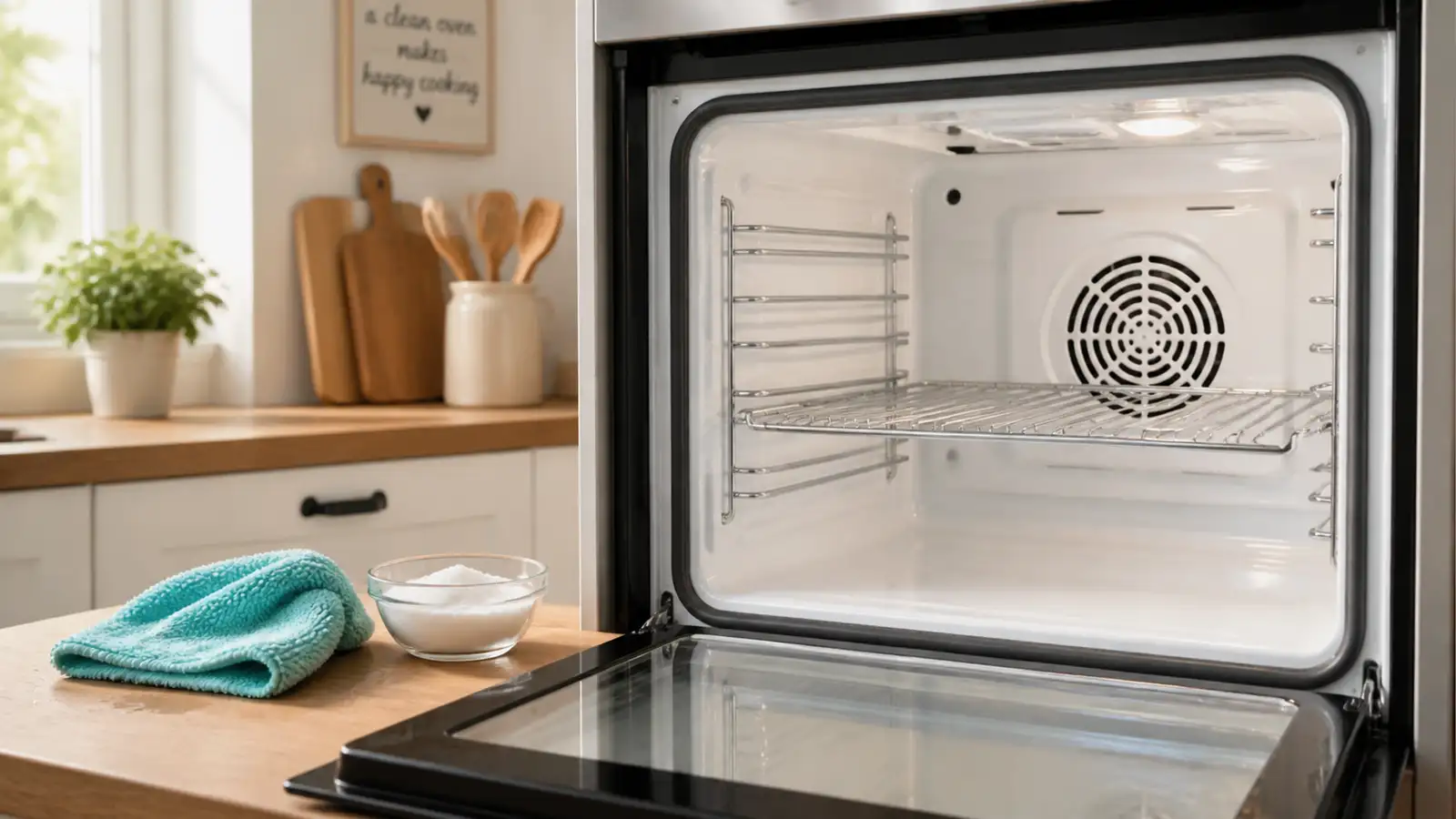
The tub and tile scrub tackles soap scum and hard water stains without the lung-burning fumes of commercial bathroom cleaners. Sprinkle baking soda generously over the wet surface, then spray with undiluted vinegar. Let the fizzing reaction work for ten minutes, then scrub with a damp sponge or brush. Rinse thoroughly. For stubborn stains, make a paste of baking soda and hydrogen peroxide and leave it on the stain for thirty minutes before scrubbing.
Toilet bowl cleaner could not be simpler. Sprinkle a half cup of baking soda into the bowl, followed by a half cup of vinegar. Let it fizz for ten minutes, then scrub with a toilet brush and flush. For disinfecting, pour a half cup of hydrogen peroxide into the bowl, let it sit for thirty minutes, then scrub and flush.
Floor cleaner varies by floor type. For sealed hardwood, tile, and laminate, combine a gallon of hot water with a quarter cup of vinegar and a few drops of castile soap. The castile soap lifts dirt while the vinegar cuts through residue. For unsealed wood or stone, skip the vinegar and use only castile soap and water.
What Natural Cleaners Cannot Do
Honesty about limitations is important. Natural cleaners are not registered disinfectants in the way that bleach and quaternary ammonium compounds are. For situations requiring medical-grade disinfection — after raw meat preparation, during illness in the household, in bathrooms used by someone with a compromised immune system — a commercial disinfectant is appropriate.
Natural cleaners also work more slowly than their chemical counterparts. The ten-minute dwell time for the baking soda and vinegar tub scrub is not optional. Rushing the process produces mediocre results. The trade-off for fewer chemicals is a little more patience.
The biggest adjustment when switching to natural cleaning is not the cleaning results but the expectations. Commercial cleaners have trained us to associate cleaning with strong chemical smells. Natural cleaners smell like vinegar for a few minutes and then like nothing at all. Clean smells like nothing. That is the point.