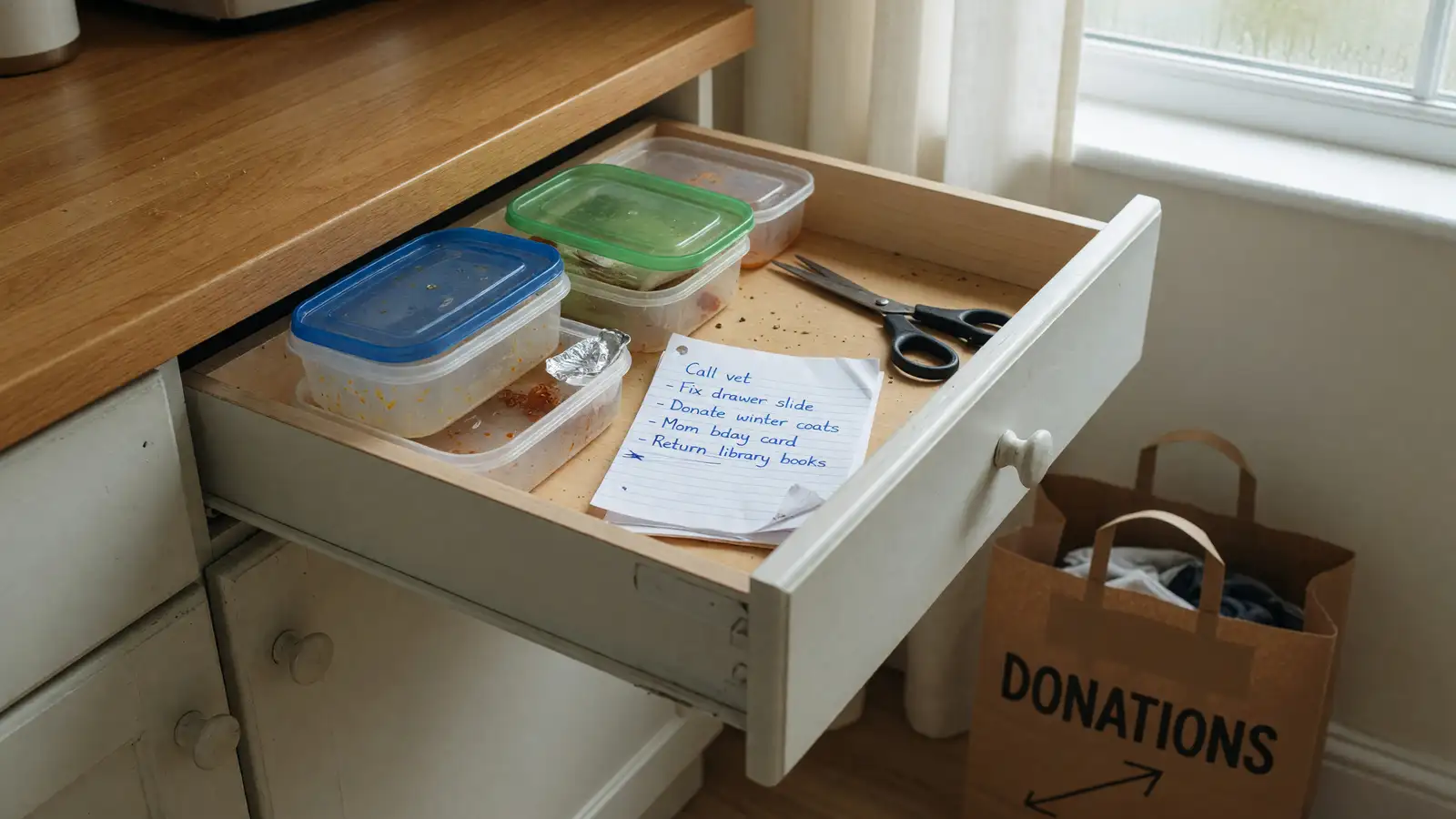
Open any kitchen drawer in the average home and you will find the evidence of good intentions gone awry: the spiralizer used once, the avocado slicer that works worse than a knife, the egg separator that seemed clever in the store. The kitchen gadget industry thrives on the promise that a specialized tool will make cooking easier, but the opposite is usually true. Every unitasker consumes drawer space, creates cleaning work, and adds a decision point to every cooking session.
A minimalist kitchen is not an empty kitchen. It is a kitchen where every tool earns its place through frequent use. Here is what actually belongs.
The Non-Negotiable Core
A chef’s knife is the single most important tool in any kitchen. An eight-inch blade handles ninety percent of cutting tasks, from mincing garlic to breaking down a whole chicken. Invest in one good knife rather than a block set of mediocre ones. The Victorinox Fibrox is the perennial best value at under fifty dollars. The Wusthof Classic and MAC Professional series are the lifetime upgrades.
A large cutting board, at least fifteen by twenty inches, provides enough workspace to prep an entire meal without constantly clearing scraps. Wood is gentler on knife edges than plastic or glass, and a well-maintained wood board resists bacteria through its natural antimicrobial properties. One large board replaces the collection of small decorative boards that crowd countertops.
A twelve-inch stainless steel skillet with a tri-ply construction — aluminum core sandwiched between stainless steel — distributes heat evenly and transitions from stovetop to oven. It sears, sautes, pan-fries, and deglazes. A single good skillet replaces the non-stick collection that degrades and needs replacement every two years.
A three or four-quart saucepan handles sauces, grains, soups, and reheating. A larger stockpot for pasta, stocks, and batch cooking rounds out the stovetop essentials. Both should be stainless steel with heavy bottoms that prevent scorching.
The Supporting Cast
Beyond the core, a handful of tools handle everything else. A fish spatula — thin, flexible, and slotted — is superior to every other spatula design for flipping delicate foods, lifting roasted vegetables, and transferring cookies. A pair of locking tongs serves as an extension of your hand for everything from tossing salad to flipping meat on the grill.
A Microplane zester grates hard cheese, citrus zest, garlic, ginger, and nutmeg with a speed and consistency that box graters cannot match. A digital instant-read thermometer eliminates the guesswork from cooking meat, baking bread, and candy-making. No more cutting into chicken to check doneness and losing the juices that make it worth eating.
A set of nesting mixing bowls in stainless steel or glass covers prep work from small spice blends to large batches of cookie dough. Nesting design means the full set occupies the footprint of the largest bowl.
What to Eliminate First
Unitaskers are the first to go. The garlic press, the avocado slicer, the strawberry huller, the egg separator, the herb stripper. Every one of these tasks is performed equally well by a chef’s knife with minimal practice. The specialized tool saves seconds at the cost of drawer space year-round.
Duplicate tools are the second target. You do not need three vegetable peelers, two can openers, and five wooden spoons. Keep the best of each category and donate the rest. The redundancy adds nothing but clutter.
Appliances that live on the counter but are used less than once a month should move to a cabinet or leave the kitchen entirely. The stand mixer used weekly stays. The juicer used annually goes.
The Countertop Rule
A minimalist kitchen has clear countertops. Not bare countertops, but surfaces where everything present is there because it is used daily and earns its permanent home. The coffee maker, the knife block, the utensil crock, the dish drying rack. Everything else lives behind closed doors.
This rule has a practical benefit beyond aesthetics. Clear counter space is the most valuable real estate in the kitchen because it is where cooking actually happens. Every square inch occupied by an appliance is a square inch unavailable for chopping, mixing, and plating.
A minimalist kitchen is not about sacrifice. It is about clarity. When every tool has a purpose and a home, cooking becomes faster, cleanup becomes easier, and the kitchen becomes a place you want to be rather than a storage facility for abandoned gadgets.