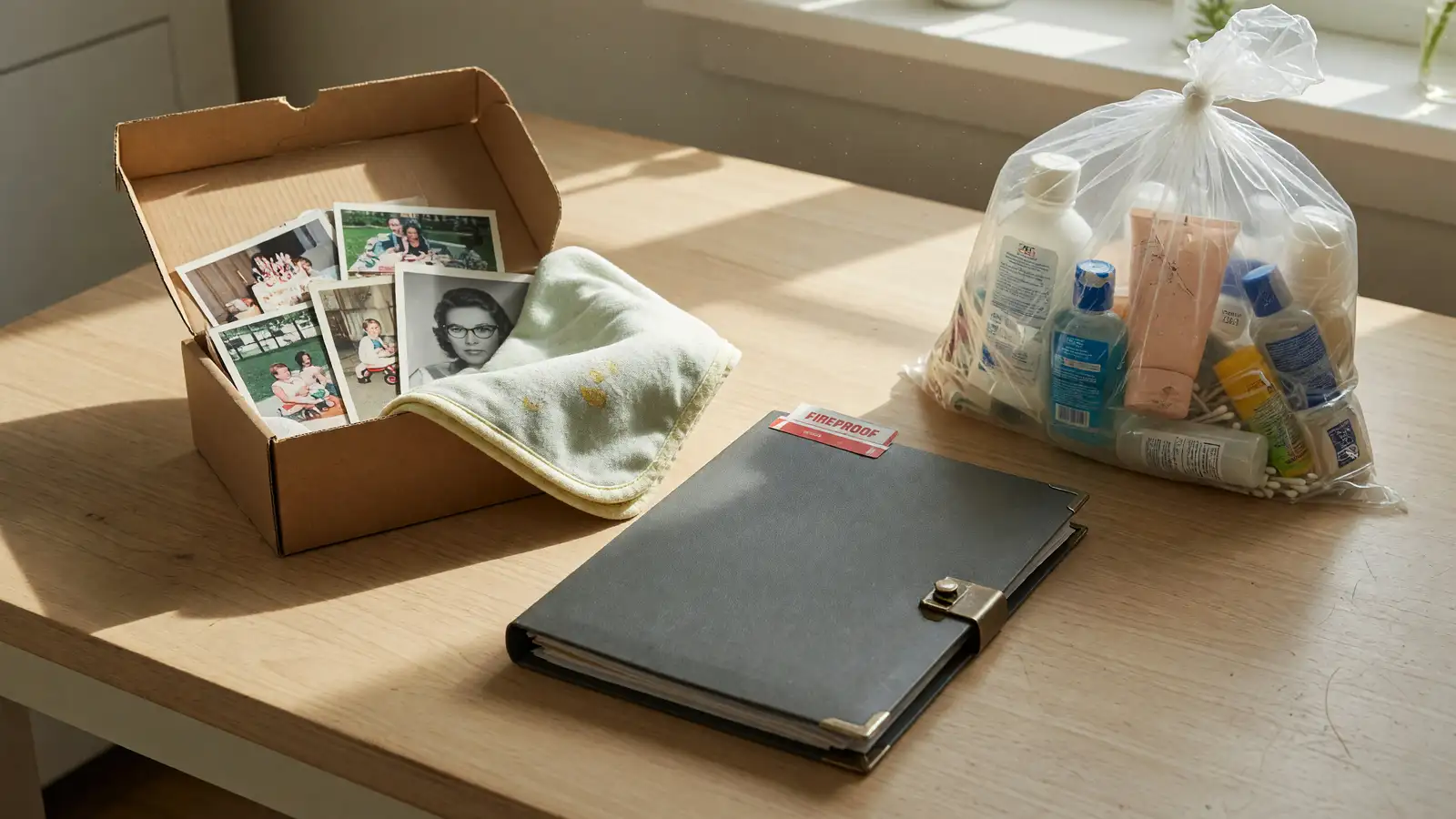
You probably have a drawer — or a box, or an entire closet — filled with things you never use but cannot bring yourself to throw away. The souvenir mug from a trip ten years ago. The pasta maker you used exactly once. The stack of magazines you might reference someday. If this sounds familiar, you are dealing with what psychologists and organizing experts now call conservation clutter.
The term, recently covered by outlets like The Washington Post, describes the tendency to hold onto items out of a sense of obligation, guilt, or a deeply ingrained aversion to waste. Unlike hoarding, which is a clinical condition, conservation clutter is a near-universal behavior that affects even otherwise tidy people.
The Psychology Behind Keeping
Understanding why you hold onto things is the first step toward releasing them. Conservation clutter typically stems from three psychological triggers.
The endowment effect is the cognitive bias that makes you overvalue items simply because they belong to you. Researchers have demonstrated this in countless experiments: once someone owns an object, they demand significantly more money to part with it than they would have paid to acquire it.
Sunk cost fallacy compounds the problem. You spent eighty dollars on that bread maker, so getting rid of it feels like admitting the money was wasted. But the money is already gone regardless of whether the appliance sits in your cabinet. Keeping it does not recover the cost; it only consumes space.
Anticipated regret is perhaps the most powerful force. What if you need that cable for a device you no longer own? What if that style of jeans comes back into fashion? Your brain overestimates the likelihood of future regret, leading you to keep far more than you actually need.
The Environmental Paradox
Many people justify conservation clutter with environmental concerns. Throwing things away feels wasteful, so keeping them seems like the responsible choice. But this logic contains a hidden flaw: an item languishing unused in your home is just as wasted as one in a landfill, except now it is wasting your living space too.
The environmentally responsible approach is not keeping everything but being thoughtful about what enters your home in the first place. For items already in your possession, donating them to someone who will actually use them extends the item’s useful life far more effectively than storing it indefinitely.
Practical Strategies for Letting Go
The traditional decluttering advice to ask yourself whether an item sparks joy is often unhelpful for conservation clutter. The items you struggle with do spark something — guilt, obligation, nostalgia — just not joy. Try these alternative approaches instead.
The twenty-twenty rule is surprisingly effective: if you can replace an item for under twenty dollars within twenty minutes from your home, you almost certainly do not need to keep it just in case. This covers most kitchen gadgets, generic cables, duplicate tools, and office supplies.
For sentimental items, try the one-representative approach. Instead of keeping every art project your child ever made, select the single piece that best represents each school year. Photograph the rest before letting them go. The memory is not in the object itself but in what it represents.
The box method works well for the genuinely uncertain. Place items you are on the fence about into a sealed box with today’s date written on it. Store the box out of sight for six months. If you never open it to retrieve anything, donate the entire box without looking inside. The emotional attachment weakens dramatically once the items are out of your daily visual field.
The Freedom on the Other Side
People who successfully work through conservation clutter consistently report the same unexpected outcome: relief, not regret. The mental weight of being responsible for dozens of unused items is heavier than most people realize until it is gone. A home filled only with things you actively use and genuinely love feels lighter, calmer, and easier to maintain.
Letting go is not about deprivation. It is about making room — physically and mentally — for the things that actually matter.